Browsed by
Tag: Middle school students

Feasibility of the STAC-T Bullying Bystander App

Feasibility of the STAC-T Bullying Bystander App

STAC-T, which included a 40-minute training and a 15-minute booster session, was completed by 249 middle school students recruited from six middle schools in rural, low-income communities in the United States. Students completed a post-training survey assessing program acceptability and relevance, whether they witnessed bullying post-training, and the use of the STAC strategies to intervene in bullying situations. Descriptive statistics were used to assess acceptability, relevance, and the use of STAC strategies. Linear regression analysis was used to assess the relationship of program acceptability and relevance to STAC strategy use.

Most students reported the program was acceptable (82.1 to 90.0%) and relevant (78.6 to 83.0%) for students at their school; 88.8% (111) of the 50.2% (125) of students who witnessed bullying post-training also reported the use of at least one STAC strategy to intervene when witnessing bullying. Program relevance was a significant predictor of post-training use of STAC strategies. In contrast, program acceptability was not a significant predictor of post-training STAC strategy use.

This study provides support for the acceptability and relevance of STAC-T, as well as the effectiveness in promoting the use of the STAC strategies to intervene in bullying situations. Further, program relevance was related to STAC strategy use, highlighting the importance of assessing program relevance for specific student populations.  

The multi-institutional team was led by Dr. Aida Midgett from Boise State University. Collaborators included Dr. Diana Doumas, Taylor Perron, and Jennalyn Shelton from Boise State University; Dr. Robin Hausheer from the University of Vermont; Dr. Amanda Winburn from the University of Mississippi; and Brandon Herbeck and Mary Buller from Klein Buendel. The research was supported by a grant to Klein Buendel from the National Institute on Minority Health and Health Disparities (R42MD014943; Dr. Aida Midgett, Principal Investigator).


Immersive STAC Luminary Presentation

Immersive STAC Luminary Presentation

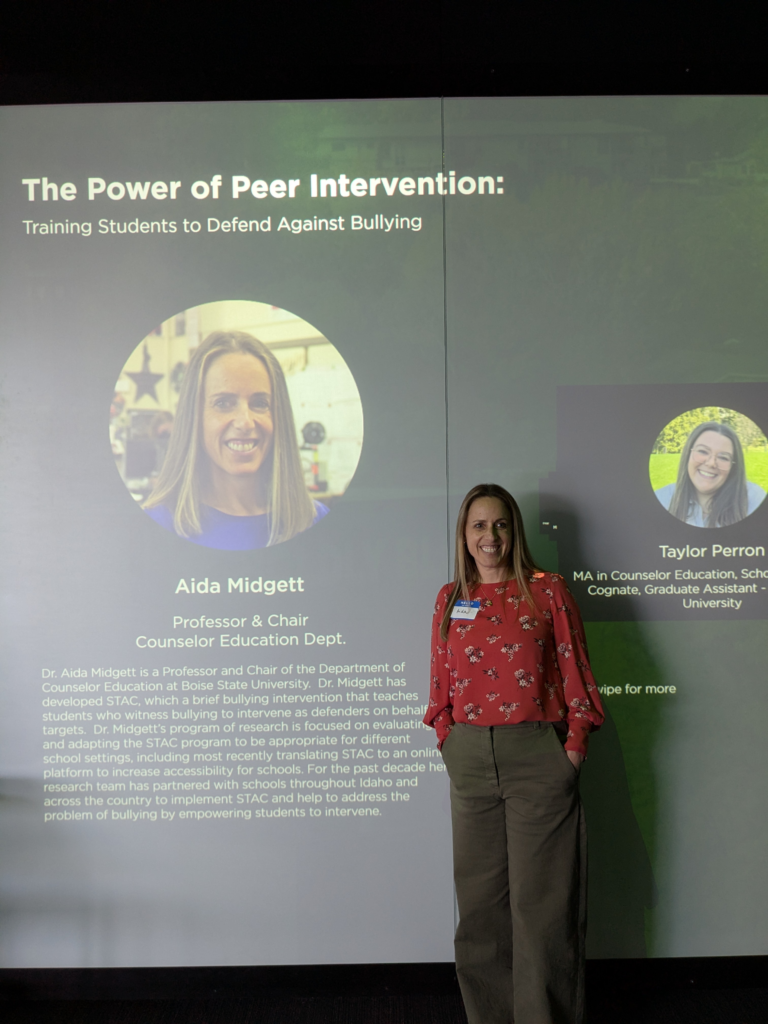
Dr. Aida Midgett, BSU Principal Investigator

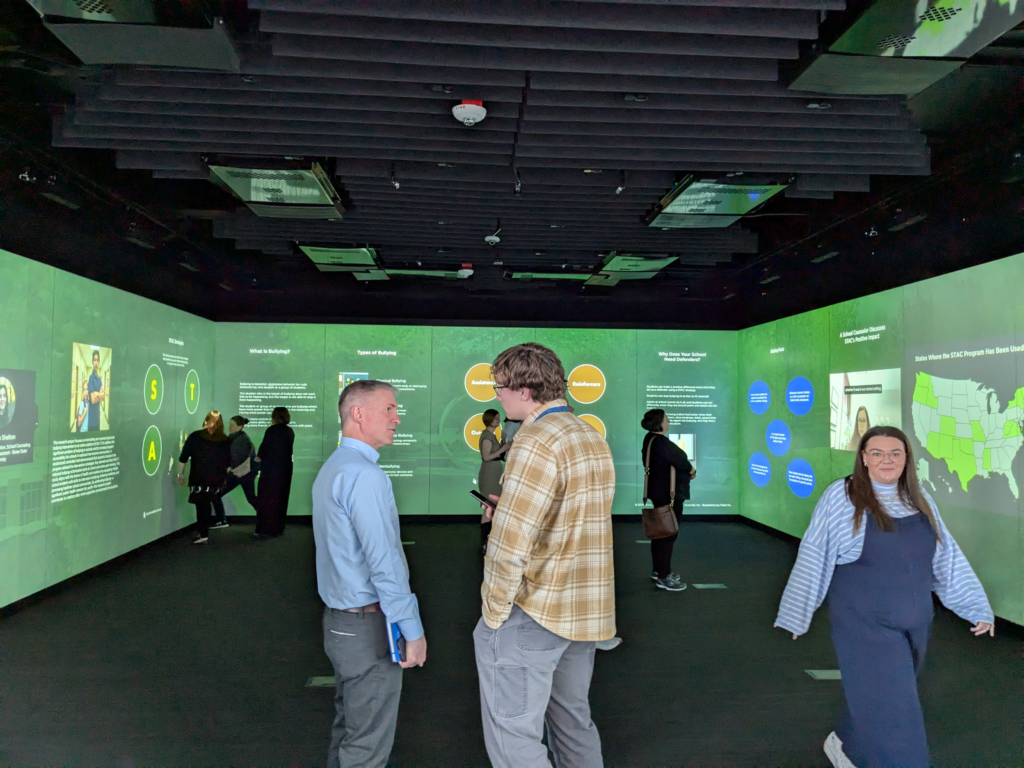
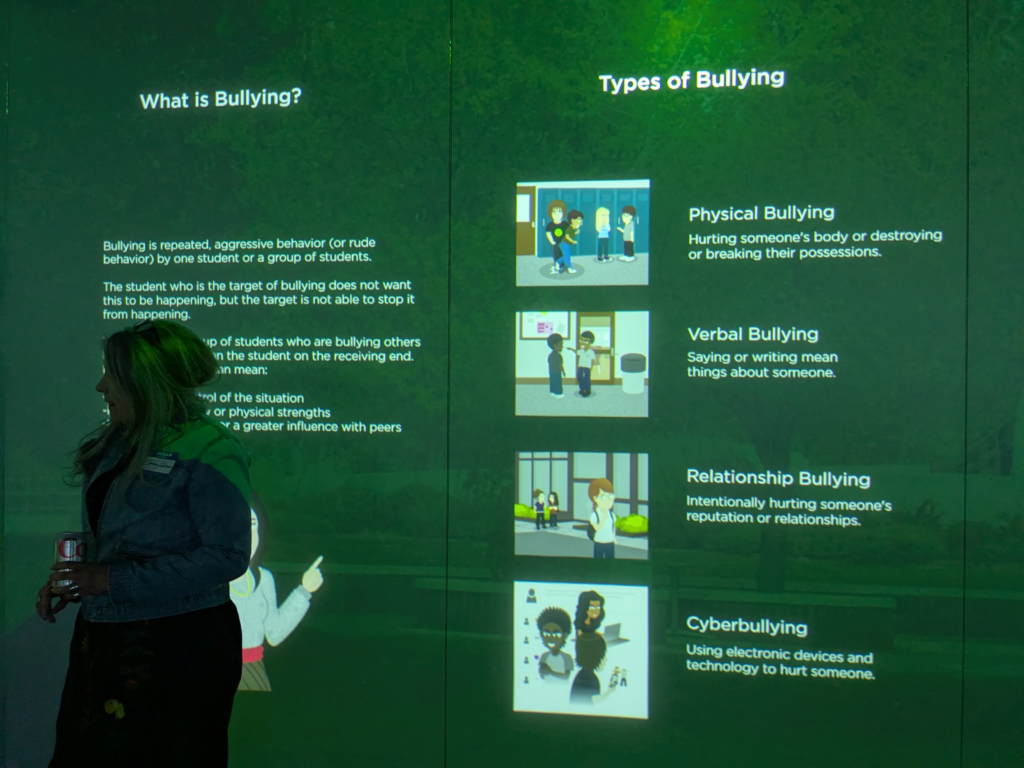
The imaginative illustrations and digital production work of the Klein Buendel Creative Team were featured in a life-size immersive luminary display in the Keith and Catherine Stein Luminary at Boise State University in April.

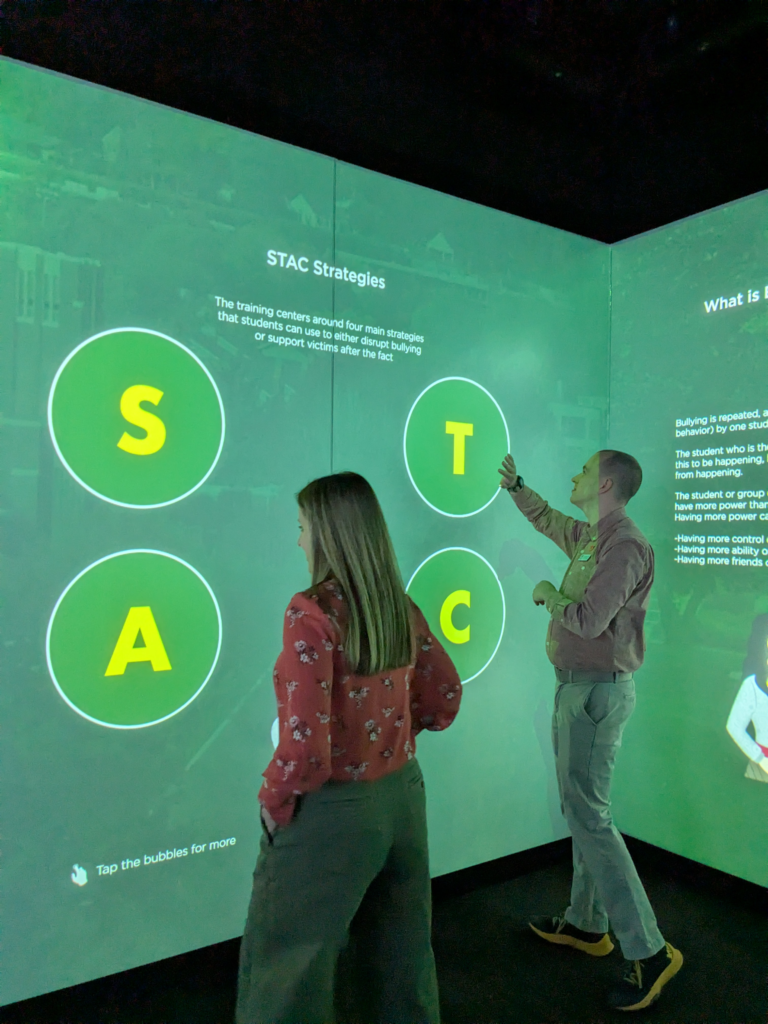
The STAC intervention, developed by Dr. Aida Midgett from Boise State University, was the subject matter on full display. STAC provides middle school students who witness bullying with strategies to act as “defenders” to help reduce both active bullying and the negative associated outcomes for both targets and bystanders. The content is delivered in person or via web-based lessons and activities which includes avatar-based scenarios, practices, and quizzes.

STAC Bullying Bystander Strategies

(1) “Stealing the Show” – using humor or distraction to interrupt a bullying situation and remove the attention away from the target;

(2) “Turning it Over” – identifying a trusted adult at school, reporting, and asking for help during a bullying incident;

(3) “Accompanying Others” – befriending and/or providing support to a peer who was a target of bullying; and

(4) “Coaching Compassion” – gently confronting the perpetrator and increasing empathy for the target.

The research to design and evaluate the interactive web-based version of STAC is funded by an STTR Phase II grant to Klein Buendel from the National Institute on Minority Health and Health Disparities at the National Institutes of Health (MD014943; Dr. Aida Midgett, Principal Investigator, Boise State University). Co-investigators include Dr. Diana Doumas from Boise State University and Mary Buller from Klein Buendel. The web-based STAC modules were designed and programmed by Klein Buendel’s Creative Team: Steve Fullmer, Creative Director; Peter Fu, Illustrator and Developer; Charlie Barger, Developer; and Brandon Herbeck, Project Coordinator.

The Stein Luminary is an all-digital museum space at Boise State University that produces a variety of immersive, interactive, and sensory experiences. Touch-activated screens and immersive projection deliver cutting-edge visual content for the Boise State University community. According to their website, “The Stein Luminary invites the Boise State community to explore creative arts, cultural sites, and scientific phenomena from around the globe. We foster interdisciplinary collaboration and research-based innovation by featuring exhibitions, performances, and installations of emerging media. Our participatory content generates vital and meaningful conversations about arts, humanities, technology, and science.”

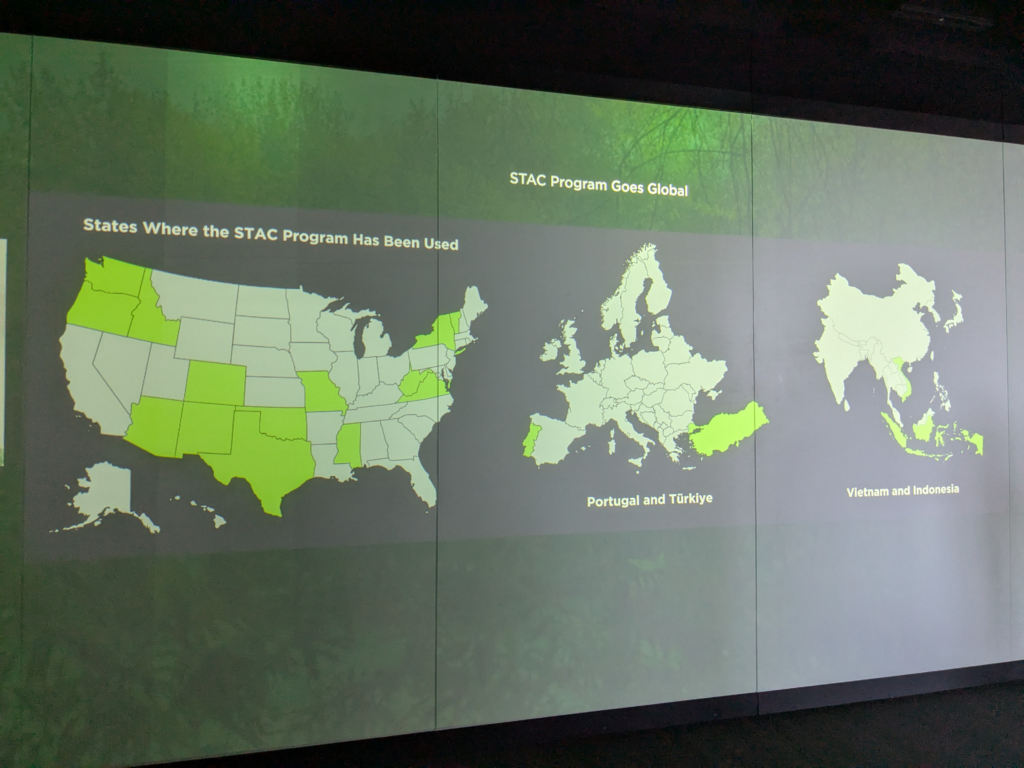
As illustrated in the luminary, the STAC program has been implemented in middle schools across the United States and multiple other countries worldwide.

Designing Characters for a Middle School Anti-Bullying Program

Designing Characters for a Middle School Anti-Bullying Program

The use of avatars in video games and apps is creative and popular. “As both a visual representation of the gamer as well as a means of facilitating manipulation of a virtual world, an avatar can be seen as a means through which an individual is able to project their physical world self into a game world” (1). Avatars can help draw the user into the scenario (or virtual world) by making it seem more personal, relatable, and engaging.

Klein Buendel investigators, collaborators, and designers are employing human-depicted avatars in the development of STAC-T. STAC-T is a brief, web-based bystander anti-bullying intervention for middle school students. The training teaches students four distinct behavioral strategies: “Stealing the Show,” “Turning it Over,” “Accompanying Others,” and “Coaching Compassion.”   

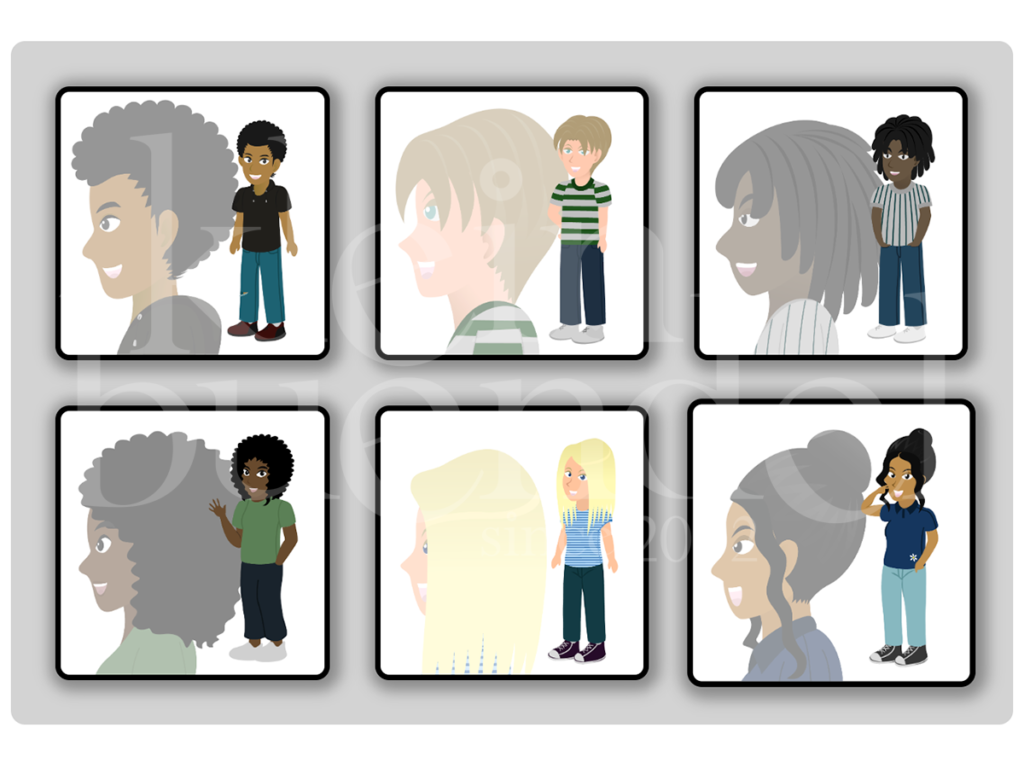
The design of 72 characters for anti-bullying scenarios by Klein Buendel developer and illustrator, Peter Fu, was guided by a matrix to provide multiple choices for middle school students representing light, medium, and dark skin tones, races, and ethnicities. In addition, the characters depict varied hair styles in short, medium, and long lengths for student self-identification, and yet similar clothing to de-emphasize comparison, peer pressure, and stigmatization.  

© 2024 Klein Buendel

STAC-T was developed and assessed by a research team from Boise State University, the University of Arkansas, and Klein Buendel. The STAC-T project is funded by an STTR grant to Klein Buendel from the National Institute on Minority Health and Health Disparities at the National Institutes of Health (MD014943; Dr. Aida Midgett, Principal Investigator from Boise State University). Mary Buller from Klein Buendel is a Co-Investigator on the project. STAC-T programming, graphic design, and illustration were done by Klein Buendel’s Creative Team.

References

  1. Ducheneaut, N., Wen, M. H., Yee, N., & Wadley, G. (2009). Body and mind: A study of avatar personalization in three virtual worlds. In Proceedings of the SIGCHI conference on human factors in computing systems (pp. 1151–1160). New York, NY: ACM Press. https://doi.org/10.1145/1518701.1518877