Browsed by
Tag: Physical Activity

Physical Activity Research with Apps and Wearable Trackers

Physical Activity Research with Apps and Wearable Trackers

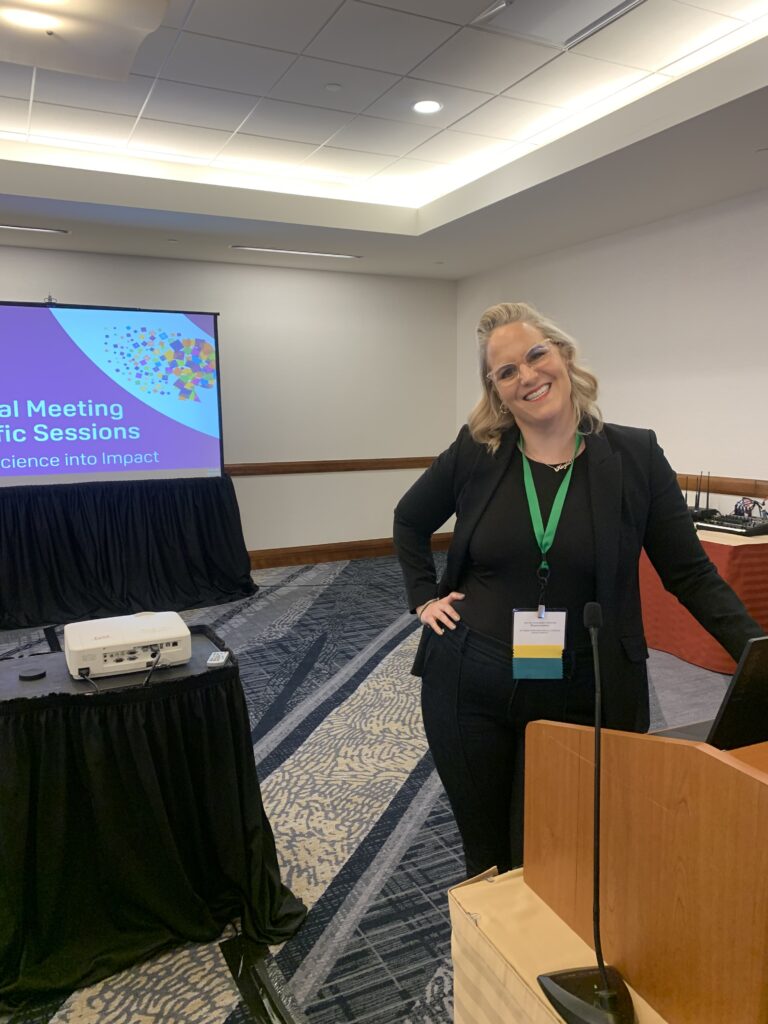
Klein Buendel Scientist, Dr. Kayla Nuss, was a presenter or co-author on four panels, posters, and presentations at the 44th Annual Sessions and Meeting of the Society of Behavioral Medicine in Phoenix, Arizona on April 26-29, 2023. The presentations highlighted research Dr. Nuss conducted as a Post-doctoral Fellow at the University of Victoria in Canada before joining Klein Buendel as a Scientist in 2022.

Dr. Kayla Nuss at SBM

Presentation 1: Poster Session

“Examining the Effect of Daily Social Media Use of Physical Activity Behaviors: A Daily Diary Study”

Presenters: Ms. Rebecca Coulter, Dr. Sam Liu, and Dr. Kayla Nuss

Previous studies have assessed the effects of health-related social media use on physical activity; however the evidence remains mixed. Currently, little is known about how daily social media use influences daily physical activity behavior. Understanding the influence of social media use on physical activity behavior may help design future interventions. The objective of this study was to examine whether the daily consumption of health-related social media content is associated with daily physical activity behaviors. Results provided evidence that viewing health-related social media content can influence daily physical activity behavior – specifically , exercise intensity. The authors suggested that future studies should focus on within-person variations in behavior based on social media use.

Presentation 2: Symposium 1

“Contextual and Situational Motivation for Physical Activity in Wearable Activity Tracker Users: A Daily Diary Study”

Presenters: Ms. Rebecca Coulter, Dr. Sam Liu, and Dr. Kayla Nuss

Wearable activity trackers (WAT) were developed to support physical activity engagement but little is known about how WAT users are motivated for physical activity. The presenters have identified distinct motivational profiles among WAT users; but no study has assessed the relationship between contextual and situational motivation for physical activity. To evaluate this relationship, intensive daily survey methodology is needed. Understanding the relationship between contextual and situational motivation for physical activity is critical to improve the effectiveness of WAT. The objectives of the study were to: (1) evaluate the feasibility of collecting day-level situational motivation for physical activity using a customized mobile app made by a no-code app development platform; and 2) describe two levels of motivation (contextual and situational) in WAT users using the hierarchical model of motivation. The presenters hypothesized that they would identify distinct motivational profiles and that those profiles would predict differing levels of situational motivation. Collecting situational motivation for physical activity was feasible using a no-code mobile platform. WAT users vary in their contextual motivational profile for physical activity and these predict some types of situational motivation. They suggested that future research should further investigate physical activity motivation in WAT users to identify intervention opportunities. 

Presentation 3: Symposium 2

“Implementing Mobile Health Interventions and Observational Studies Using a No-code App Development Platform”

Presenters: Dr. Denver Brown, Dr. Sam Liu, Dr. Kayla Nuss, and Ms. Amanda Willms

Mobile health (mHealth) technology holds tremendous potential to deliver behavior health interventions and understand human behavior. However, a challenge facing researchers when conducting mHealth research is the resources required to develop and maintain mHealth apps. Specifically, a no-code mHealth research app development platform may enable researchers with no previous software programming skills to create apps through a graphical user interface. In this symposium, presenters discussed how a no-code app development platform, was created and used to co-design and implement physical activity mHealth interventions and conduct longitudinal observational studies to understand physical activity behavior. The first presenter provided an overview of the no-code mHealth research platform and discussed its development and usability testing. The second presenter discussed how the platform was used to co-design adaptive mHealth physical activity interventions. Dr. Nuss discussed how the platform was used to implement a daily diary study to examine changes in situational motivation for physical activity based on contextual motivational profile in current wearable activity tracker users over a 14-day period. The final presenter discussed how the platform was used conduct a longitudinal feasibility study examining the influence that first-year roommates have on one another’s device-measured physical activity behavior during the transition to university which included weekly surveys to capture dyadic relations.

Presentation 4: Paper Session

“Reflecting on Physical Activity across Two Years of the COVID-19 Pandemic: Predictors if Intention-Behavior Profiles”

Presenter: Dr. Ryan Rhodes

Co-authors: Dr. Sam Liu, Dr. Kayla Nuss, and Dr. Wuyou Sui

The COVD-19 Pandemic has affected how many people engage in regular moderate-to-vigorous intensity physical activity (MVPA). Understanding the correlates of various motivational and behavioral profiles is important to producing effective interventions. The purpose of this study was to predict current and dynamic (across two years of the COVID-19 Pandemic) intention and MVPA profiles using the multi-process action control (M-PAC) framework. Few participants increased MVPA across the pandemic and dynamic patterns of intention-MVPA profiles by pre-pandemic MVPA showed the presence of two at risk groups (relapsed non-intenders relapsed unsuccessful intenders) who have relapsed in MVPA. Collectively, the findings support the joint promotion of reflective regulatory and reflexive processes in the choice of behavior change techniques to promote post-pandemic MVPA intention and behavior. 

Effects of Motivational Interviewing and Wearable Fitness Trackers on Motivation and Physical Activity in Inactive Adults

Effects of Motivational Interviewing and Wearable Fitness Trackers on Motivation and Physical Activity in Inactive Adults

Despite tremendous adoption of wearable fitness trackers by adults, it is unclear if they affect physical activity engagement or motivation. In a paper published in the Journal of Sports Sciences, Dr. Kayla Nuss, Klein Buendel Scientist, and her research collaborators reported on a study to examine the combined effects of motivational interviewing and wearable fitness trackers on motivation and physical activity in inactive adults.

The authors hypothesized that combining a wearable fitness tracker (such as a FitBit®) with an effective intervention (motivational interviewing), would positively influence both motivation and physical activity. To test the hypothesis, a 12-week randomized controlled trial was conducted with 40 adults who did not meet physical activity recommendations. The four comparison groups were: (1) physical activity education only (educational control) with 10 participants, (2) use of a wearable fitness tracker (WFT) with 10 participants, (3) bi-weekly motivational interviewing sessions with 10 participants, or (4) both motivational interviewing and WFT (WFT+) with 10 participants.

Motivation and physical activity were measured though an online survey and actigraphy (a method to objectively estimate physical activity) pre- and post-intervention. Both the WFT+ and motivational interviewing groups scored higher in autonomy, competence, and relatedness for physical activity compared to the control group, which is associated with higher quality, or more autonomous forms of motivation. Further, both groups did show improvements in autonomous forms of motivations (such as interest or enjoyment) and decreased controlled forms of motivation (such as pressure or reward). Detailed descriptions of the study’s methods, recruitment efforts, measures, data analysis, outcomes, and limitations can be found in the Journal of Sports Sciences publication.

The authors detected no changes in physical activity. High autonomous motivation at baseline predicted higher post-intervention physical activity in the WFT+ group, but predicted lower post-intervention physical activity in the WFT group. The results of the study suggest that motivational interviewing alone or with a wearable fitness tracker can improve basic psychological needs and autonomous forms of motivation for physical activity, but not physical activity participation. The authors conclude that individual differences in motivation at baseline may moderate the effect of a wearable fitness tracker on physical activity. The findings add to the growing body of evidence that wearable fitness trackers can have some positive effect on adult’s physical activity.

This research was supported by Colorado State University Department of Health and Exercise Science (Dr. Kayla Nuss, Project Director). Collaborating authors included Ms. Kristen Moore from the University of Southern California; Dr. Tasha Marchant from the University of Colorado Health Sciences Center; Dr. Jimikaye Beck Courtney from the University of North Carolina-Chapel Hill; and Ms. Kathryn Edwards, Dr. Julia Sharp, Dr. Tracy Nelson, and Dr. Kaigang Li from Colorado State University.

Welcome Dr. Kayla Nuss!

Welcome Dr. Kayla Nuss!

Dr. Kayla Nuss

Kayla Nuss, Ph.D., is Klein Buendel’s newest Scientist and Principal Investigator. Dr. Nuss comes to Klein Buendel from a post-doctoral fellowship with the Digital Health Lab at the University of Victoria in Canada, where she analyzed de-identified data for a comprehensive digital diabetes intervention program in India. 

In 2021, Dr. Nuss earned her Ph.D. in Bioenergetics from Colorado State University (CSU). Her dissertation was titled “Wearable Fitness Trackers in Physical Activity Research: Accuracy and Effects on Motivation and Engagement.” She also has two Master’s Degrees: one in Health and Exercise Science from CSU and a second in Student Development in Post-Secondary Education from the University of Iowa. She has a Bachelor’s Degree in Psychology and Spanish from Cornell College in Iowa. And she graduated from our local Golden High School!

Dr. Nuss’ research interests center on motivation for physical activity, how wearable technology supports or thwarts motivation in various populations, and how to optimize wearable technology to support the development and maintenance of engagement in physical activity.

At Klein Buendel, she is currently collaborating with Dr. Robert Newton from the Pennington Biomedical Research Center in Louisiana, Dr. Derek Griffith from Georgetown University, and Dr. David Buller from Klein Buendel on a research study to address physical activity maintenance in African American men with smartphone technology (MD014947; Dr. Robert Newton and Dr. Kayla Nuss, Multiple Principal Investigators).

Dr. Nuss is also a Co-Investigator on a collaborative team of highly-experienced cancer prevention and control investigators from the Four Corners Cancer Centers Collaborative (University of Arizona, University of Colorado, University of New Mexico, and University of Utah), Colorado State University, and Klein Buendel (CA268037; Dr. David Buller and Dr. Andrew Sussman from the University of New Mexico, Multiple Principal Investigators). This team is launching a 5-year research study focusing on decreasing cancer risk factors among emerging adults (ages 18-26) living in rural counties in the “Four Corners” states (Arizona, Colorado, New Mexico, and Utah) using a social media campaign. Dr. Nuss will lend her expertise in the area of motivation for physical activity.

Collaborator Spotlight:
Dr. Derek Griffith

Collaborator Spotlight:
Dr. Derek Griffith

Dr. Derek Griffith is a Founding Co-Director of the Racial Justice Institute, the Founder and Director of the Center for Men’s Health Equity, a Professor of Health Systems Administration and Oncology, and a Member of the Lombardi Comprehensive Cancer Center at Georgetown University in Washington, DC. He earned his Ph.D. from DePaul University in 2002 and completed a Post-Doctoral Fellowship at the University of North Carolina School of Public Health in 2004.

Dr. Griffith’s research focuses on strategies to improve African American men’s health, such as precision lifestyle medicine interventions to prevent and control obesity and other chronic diseases. Specifically, he studies the “links between notions of masculinity or manhood and health among men of color; the role of stress and coping processes in men’s health disparities; and how gender intersects with race, ethnicity, SES and other variables to shape men’s physical and mental health behavior and health outcomes.” 

In a current research project, Dr. Griffith is a Co-Investigator with Dr. Robert Newton from the Pennington Biomedical Research Center in Louisiana and Dr. David Buller from Klein Buendel on a study to develop and evaluate a smartphone app to increase and maintain physical activity in African American. The app is called FitBrothers and will include personalization, chronic disease health information, dietary information, competition activities, and incentives to promote and sustain physical activity. The study is being funded by a Small Business Technology Transfer grant to Klein Buendel from the National Institute on Minority Health and Health Disparities (MD014947; Dr. Robert Newton and Dr. David Buller, Multiple Principal Investigators).

Dr. Griffith has received research grants as the Principal Investigator from the American Cancer Society, the Robert Wood Johnson Foundation, and several institutes within the National Institutes of Health. He has authored over 140 peer-reviewed manuscripts and serves on the editorial boards of several public health and men’s health journals.

Dr. Griffith has received multiple distinguished awards and honors throughout his career, including:

  • The Tom Bruce Award from the Community-Based Public Health Caucus of the American Public Health Association in recognition of his research on eliminating health disparities that vary by race, ethnicity and gender;
  • Recognition as a Fellow of the American Academy of Health Behavior for his significant contributions to the field of health behavior research; and
  • Designation as one of 1,000 Inspiring Black Scientists in America by the Cell Mentor’s Community of Scholars. 

FitBrothers

FitBrothers

African American men experience significant health disparities across a number of preventable chronic diseases including cardiovascular disease, strokes, diabetes, and cancer. Physical activity (PA) is a modifiable risk factor for these conditions. However, the limited number of clinic- or community-based PA promotion studies that have included African American men have resulted in successful short-term behavior change for PA levels. Maintenance of increased PA levels over an extended time period is needed for sustained health benefits.

A research team from Klein Buendel, the Pennington Biomedical Research Center (PBRC), and Georgetown University are launching a new research project to address PA maintenance in African American men with technology. The project is: A Smartphone App to Increase and Maintain Physical Activity in African American Men (FitBrothers). The effort is being led by Dr. Robert Newton from PBRC and is being funded by a Fast-Track STTR grant to Klein Buendel from the National Institute on Minority Health and Health Disparities (MD014947; Dr. Robert Newton, Principal Investigator).

Dr. Newton’s preliminary focus group data indicates that African American men would be receptive to maintenance strategies delivered via smartphone. For this new project, the team will develop a prototype smartphone app and conduct usability testing to determine design viability and acceptability among would-be users in Phase I. In Phase II, the team will conduct a comparative effectiveness trial to assess success of the app on the PA maintenance levels of participating African American men.

Dr. Newton is an Associate Professor of Physical Activity and Ethnic Minority Health at PBRC. His research collaborators include Dr. Derek Griffith from Georgetown University and Dr. David Buller from Klein Buendel. Dr. Griffith is the Founding Co-Director of the Racial Justice Institute, Founder and Director of the Center for Men’s Health Equity, and Professor of Health Systems Administration and Oncology at Georgetown. Dr. Buller is the Director of Research at Klein Buendel. The FitBrothers app will be engineered by Klein Buendel’s Creative Team.

Using Machine Learning Techniques to Predict Sunburn Risk in Outdoor Exercisers

Using Machine Learning Techniques to Predict Sunburn Risk in Outdoor Exercisers

In response to recreational UV exposure being associated with skin cancer (1), Julia Berteletti, MSW, and David Buller, PhD, of Klein Buendel have launched a new research project to harness technology to increase individual’s sun safety during outdoor physical activity. The title of the new project is “Using Retrospective and Real-Time Physical Activity Tracking to Predict Risk of Sunburn in Outdoor Exercisers on Strava.”

The Strava Sun Project is based on evidence that individuals who engage in more physical activity have a higher prevalence of sunburn (2, 3-6), a proximal biomarker of melanoma risk, and melanoma is positively associated with physical activity (7). For some athletes, forgetting to apply sunscreen (8,9) or not liking its feel while engaged in physical activity can be barriers to sun protection (8,10). An expert meeting hosted by the National Cancer Institute identified sun safety during physical activity as a priority research area (11) and the U.S. Surgeon General prioritized strategies for coordinating messages on sun safety and physical activity in the Call to Action to Prevent Skin Cancer (12).

Online and mobile technologies for tracking physical activity have exploded over the past decade. Many Americans wear activity trackers or GPS-enabled devices, such as  Fitbit and Garmin, and upload their physical activity data to websites/mobile apps. Strava, an activity tracking app and social networking site for athletes of all abilities, is one of the most popular. Millions share their own activities and follow and comment on physical activity by other users in their network. The goal of this project is to increase skin cancer prevention among a high-risk population, adults who engage in outdoor physical activity by establishing feasibility of interfacing sun protection advice with the Strava website/mobile app.

Specifically, the research will create an algorithm that predicts when individuals are likely to be engaged in physical activity outdoors, and delivers sun safety advice tailored to time, location, and personal risk (for example, skin sun sensitivity). The Strava Sun program will obtain user data and deliver ecologically-valid sun safety advice by utilizing Strava’s open-source Applications Programming Interface (API) and location-based advice algorithms developed by Klein Buendel for the sun safety mobile app, sunZapp (13). Machine learning techniques will be employed to develop an algorithm using Strava activities to predict high-risk behavior, such as outdoor physical activity when UV levels are high and sun safety is advised.

Overall, a sun protection interface for the Strava platform will allow for the identification of a large population of Americans at high risk for skin cancer who routinely engage in physical activity, often outdoors with high-risk sun exposure, and reach them with sun safety advice they may not seek on their own to motivate them to practice sun safety during outdoor activities.

This project is funded by a grant from the National Cancer Institute at the National Institutes of Health (CA241637; Dr. David Buller and Ms. Julia Berteletti, Multiple Principal Investigators). Co-Investigators include Dr. Kim Henry and Dr. Chuck Anderson from Colorado State University. Other collaborators include Dr. Sherry Pagoto from the University of Connecticut and Mr. Scott Camichael, a recent software engineer at Strava. Developers at Klein Buendel will produce the API database and program.

References

  1. Moehrle M. Outdoor sports and skin cancer. Clin Dermatol. 2008;26(1):12-15.
  2. Holman DM, Ding H, Guy GP, Jr., Watson M, Hartman AM, Perna FM. Prevalence of Sun Protection Use and Sunburn and Association of Demographic and Behaviorial Characteristics With Sunburn Among US Adults. JAMA Dermatol. 2018;154(5):561-568.
  3. Holman DM, Berkowitz Z, Guy GP, Jr., Hartman AM, Perna FM. The association between demographic and behavioral characteristics and sunburn among U.S. adults – National Health Interview Survey, 2010. Prev Med. 2014;63:6-12.
  4. Hall HI, Saraiya M, Thompson T, Hartman A, Glanz K, Rimer B. Correlates of sunburn experiences among U.S. adults: results of the 2000 National Health Interview Survey. Public Health Rep. 2003;118(6):540-549.
  5. Coups EJ, Manne SL, Heckman CJ. Multiple skin cancer risk behaviors in the U.S. population. Am J Prev Med. 2008;34(2):87-93. doi: 10.1016/j.amepre.2007.09.032
  6. Lawler S, Sugiyama T, Owen N. Sun exposure concern, sun protection behaviors and physical activity among Australian adults. Cancer Causes Control. 2007;18(9):1009-1014.
  7. Moore SC, Lee IM, Weiderpass E, et al. Association of Leisure-Time Physical Activity With Risk of 26 Types of Cancer in 1.44 Million Adults. JAMA Intern Med. 2016;176(6):816-825.
  8. Petty KN, Knee CR, Joseph AK. Sunscreen use among recreational cyclists: how intentions predict reported behavior. J Health Psychol. 2012;18(3):439-447.
  9. Wysong A, Gladstone H, Kim D, Lingala B, Copeland J, Tang JY. Sunscreen use in NCAA collegiate athletes: Identifying targets for intervention and barriers to use. Prev Med. 2012;55(5):493-496.
  10. Berndt NC, O’Riordan DL, Winkler E, McDermott L, Spathonis K, Owen N. Social cognitive correlates of young adult sport competitors’ sunscreen use. Health Educ Behav. 2011;38(1):6-14.
  11. Geller AC, Jablonski NG, Pagoto SL, et al. Interdisciplinary perspectives on sun safety. JAMA Dermatol. 2018;154(1):88-92. PMC5839662.
  12. U.S. Department of Health and Human Services. The Surgeon General’s Call to Action to Prevent Skin Cancer. Washington, D.C.: U.S. Department of Health and Human Services, Office of the Surgeon General;2014.
  13. Heron KE, Smyth JM. Ecological momentary interventions: incorporating mobile technology into psychosocial and health behaviour treatments. Br J Health Psychol. 2010;15(Pt 1):1-39.

Physical Activity Maintenance in African American Men

Physical Activity Maintenance in African American Men

In a recent publication in mHealth, Dr. Robert Newton, Dr. Valerie Myers, and their coauthors describe the development of a smartphone app to help African American men maintain physical activity. The formative research was funded by a Small Business Technology Transfer (STTR) grant to Klein Buendel from the National Institute on Minority Health and Health Disparities.

African American men experience higher rates of morbidity and mortality from several chronic diseases that have low physical activity as a modifiable risk factor. For example, increased levels of physical activity have been shown to reduce the risk of developing obesity, cardiovascular disease, and diabetes. Yet, African American men’s levels of regular physical activity remain low.

The study set out to develop and test the feasibility of a prototype smartphone app to promote physical activity maintenance in African American men. The publication describes formative research (focus groups), user-centered design, and evaluation (usability testing and one-month beta testing) of the MobileMen app through an iterative process with participants from the target population.

MobileMen and its learning activities were designed with a Social Cognitive Theory framework. The programmed app included a dashboard, learning activities, a prompting system, an activity tracker, and rewards.

Users reported above average satisfaction with the app. They also rated the app as user-friendly, helpful, enjoyable, and culturally relevant. The participants reported willingness to use the app to improve their physical activity. Rates of app use and other data are reported in the paper. A full description of the methods, results, conclusions, strengths, and limitations of the feasibility study, as well as a discussion on the inclusion of nutrition information, can be found in the mHealth publication.

The STTR Phase I project was funded by grant number MD010304 (Dr. Robert Newton, Pennington Biomedical Research Center, Principal Investigator). Coauthors include Dr. Valerie Myers and Tiffany Jerrod from Klein Buendel, Leah Carter and Jessica Romain from the Pennington Biomedical Research Center, and Dr. Derek Griffith from Vanderbilt University.

¡Caminemos Juntas!: A Smartphone App for Latinas to Connect with Walking Partners

¡Caminemos Juntas!: A Smartphone App for Latinas to Connect with Walking Partners

Dr. Valerie Myers, Klein Buendel (KB) Senior Scientist, is the Principal Investigator leading a new research project aimed at helping Latinas combat barriers to physical activity using smartphone technology and social networks.

Hispanic women are a growing and influential segment of the population, yet health disparities for Latinas remain high. Latinas are more likely than their non-Hispanic White counterparts to be overweight, diagnosed with diabetes, and physically inactive. Regular physical activity promotes physical and emotional well-being, such as lower risk of heart disease and diabetes, weight management, and improved quality of life, yet physical activity interventions for Latinas remain limited.

Community-focused walking interventions produce improvements in physical activity and are well-received by Latinas when they are socioculturally sensitive. New technology has the ability to provide Latinas with innovative ways to connect socially and increase PA. Location-based services (LBS) are a popular technology that uses geographical positioning to allow individuals to use their smartphones to connect to their surrounding environment.

¡Caminemos Juntas! is a physical activity walking app that uses location-based services to connect Latinas within nearby neighborhoods as a way to provide social support for increased walking behavior. A prototype of the ¡Caminemos Juntas! app was programmed for both iOS and Android smartphones in a previous Phase I project. Multi-method formative research was conducted to guide app design and content prior to conducting field usability testing. To guide prototype development, a national sample of Latinas (n=98; mean age 32.7 +/- 7.8 years; 45% primary Spanish speaking; 28.6% with annual income < $15,000) were surveyed to better understand their preferences, usage, needs, and obstacles of current apps in relation to health and physical activity. Latinas’ current physical activity behaviors and smartphone use, opinions on health-related apps using LBS, how often they access social networking sites on their mobile phone, and their likelihood of using a social networking app to connect to others with intentions to be physically active were also examined.

Phase I results revealed that 22.5% never or rarely exercised, 73.5% accessed social networking sites daily with an average of 8 times a day, and 43.9% used LBS every day. Ease of use (82%), informationally accurate (79.2%), and reliability (84.7%) were app features rated as highly important. Over 63% reported high likelihood of using a social networking app to connect to others with the intentions of being physically active, and 67.4% reported that this type of app would be very helpful. Focus groups showed that the app was appealing, also.

In the new Phase II project, the ¡Caminemos Juntas! app will be fully developed and evaluated in a randomized control trial with Latinas aged 18-45 in San Jose, CA and Denver, CO. Changes in physical activity, social support for exercise, and quality of life will be evaluated. New features to be explored include Fitbit® device integration, mapping of walks, and social media integration. The LBS features of the app will allow Latinas to determine a safe place to meet for a walk, connect with other users nearby, and be notified if there was an available walk in the user’s vicinity.

The research is funded by the National Institute on Minority Health and Health Disparities (MD009652) at the National Institutes of Health through the Small Business Innovation Research Program. Dr. Myers’ collaborators include Dr. Abby King from Stanford University, and Dr. Gary Cutter from Pythagorus, Inc. in Alabama.