Browsed by
Tag: Mobile App

No Weigh!

No Weigh!

Klein Buendel Scientist, Dr. Kayla Nuss, has launched a new research project, funded by the National Institute of Diabetes, Digestive and Kidney Diseases. It will test a novel approach to physical activity promotion. The proposed intervention, NoWeigh!, is a mobile app based on a framework called body neutrality. Body neutrality emphasizes gratitude for the body’s function, a neutral attitude about the body’s appearance, and engagement in movement that is enjoyable, rather than weight loss.

Obesity rates are on the rise in the United States. Weight loss has been the primary recommendation for managing comorbidities with obesity, such as elevated blood lipids and glucose, despite ample evidence that weight loss attempts generally lead to weight regain and weight cycling, which are associated with negative mental health outcomes like anxiety and depression. Experts have called for non-weight loss obesity management, by emphasizing health behaviors such as physical activity. An effective method to deliver physical activity interventions is via mobile apps, of which women are the most frequent users. However, most physical activity apps emphasize weight loss.

The goal of the new Phase I SBIR project is to demonstrate the technical merit and feasibility of developing a smartphone mobile app (NoWeigh!) to support physical activity engagement using the tenants of body neutrality and Self-Determination Theory as frameworks. Mobile health (mHealth) approaches using smartphones offer several advantages for dissemination and implementation of health interventions including that they are portable, typically “on,” readily available, affordable, and offer advanced functionality. In addition, ownership of smartphones among adults is high, enabling potentially vast reach and apps have been shown to improve uptake of, and adherence to, healthy lifestyle strategies.

Aim 1: Perform iterative focus groups in adult women (aged ≥18 years) from diverse backgrounds to collect potential-user information to identify barriers, needs and preferences for a body-neutrality physical activity app design.

Aim 2: Design the conceptual model and develop planned components of the NoWeigh! app which will include storyboards and clickable wireframes.

Aim 3: Conduct beta and usability testing on the clickable wireframes prototype of the NoWeigh! app to show feasibility, acceptability and potential for engagement, and finalize the app design.

Successful completion of Phase I SBIR research will provide evidence to support a larger Phase II project to program and test the full-scale NoWeigh! app in a randomized comparative effectiveness trial. The goal is to produce a commercially ready mobile app for physical activity promotion that does not center on weight loss, a cost-effective lifestyle intervention for decreasing disease risk and reducing healthcare costs. This mHealth approach is an ideal medium for physical activity promotion because the reach, portability, and advanced functionality of mHealth devices allows for effective use by a broad range of adult women.

This grant was awarded to Klein Buendel by the National Institute of Diabetes, Digestive and Kidney Diseases (DK142209; Dr. Kayla Nuss, Principal Investigator). Dr. Nuss’ research collaborator on this project is Anne Poirier. She is the owner of a body neutrality coaching company and the author of the book, The Body Joyful, a guide to a life based on self-care and compassion. The NoWeigh! app will be designed and programmed by the Creative Team at Klein Buendel.


MobileMen Project Protocol

MobileMen Project Protocol

African American men are at higher risk for serious health conditions such as cardiovascular disease, diabetes, and stroke compared to non-Hispanic White men. Physical activity is a modifiable health behavior that has been shown to decrease chronic disease risk. Still, engagement in physical activity is alarmingly low in African American men. While interventions to improve physical activity engagement are effective in several populations, very few have been tailored to the unique needs of African American men. Even fewer have leveraged mobile health apps, despite African American men’s interest in and willingness to use such technologies for health improvement.

Now a multi-disciplinary research team from Klein Buendel, Pennington Biomedical Research Center, and three universities is conducting a comparative effectiveness trial that aims to evaluate MobileMen, a physical activity promotion app tailored to the needs and preferences of African American men. The team has published the plans and methods for the trial in JMIR Research Protocols.

The trial compares the MobileMen app to a commercially available physical activity promotion app with similar features but without culturally tailored components. Specifically, the study is recruiting a sample of 100 “low active” (less than 7500 steps per day) African American men aged 30 years or older from Baton Rouge, Louisiana and its surrounding communities. All participants are given a Fitbit Charge 6 wearable activity tracker to assess daily physical and steps. Participants are randomly assigned to either the MobileMen intervention app or a comparator app. The intervention period is six months, during which participants will interact with their assigned mobile app.

MobileMen includes features such as digital badges earned for physical activity, tangible prizes like exercise equipment, challenges among participants, goal setting, nutrition, physical activity, and behavior change educational information in text, audio, and video formats.

Participants complete assessments at baseline and at six months after random assignment. Assessments include objective measurements of daily steps and minutes of moderate to vigorous physical activity, quality of life, dietary measures, self-efficacy for fruit and vegetable consumption and physical activity, and autonomous motivation for physical activity. Detailed descriptions of measures and methods can be found in the JMIR Research Protocols paper.

Mobile apps are a widely accessible means to disseminate culturally tailored physical activity promotion interventions to various populations, including African American men. MobileMen has the potential to impact physical engagement in African American men, to help improve the overall health and chronic disease risk in this underrepresented population.

This research is funded by an STTR Fast Track grant to Klein Buendel from the National Institute on Minority Health and Health Disparities (MD014947). The Principal Investigator is Dr. Robert Newton from the Pennington Biomedical Research Center. Authors on this paper include Callie Hebert, Phillip Nauta, and Dr. Robert Newton from the Pennington Biomedical Research Center; Dr. April Stull from Baylor University; Dr. Damon Swift from the University of Virginia; Dr. Derek Griffith from the University of Pennsylvania; and Dr. Kayla Nuss, Amanda Brice, and Dr. David Buller from Klein Buendel. The MobileMen app was programmed by the Klein Buendel Creative Team.

Results of the Pinpoint Project

Results of the Pinpoint Project

The Pinpoint web app was created and evaluated by Klein Buendel in collaboration with HPC International through a grant funded by the National Institute on Minority Health and Health Disparities (MD010746; Dr. Valerie Myers, Principal Investigator). Designed for adolescents aged 13-17, the Pinpoint web app provides education on communication strategies and sickle cell disease (SCD) care management. Pinpoint includes a pain assessment tool, vocabulary game, body scanner reflection, and educational self-disclosure activity. It was developed as an interactive gaming web app for use on smartphones, tablets, and desktop computers. Learning Buddies were added to act as a guide for the teen in the app to explain each activity and feature with text and voiceover. There are two Learning Buddy characters to choose from, each of whom had their own fictional story about living with SCD. Learning Buddies are customizable, allowing teen participants to choose clothing, hair style, and skin tone upon registering for the app. For each activity the teens participate in, points can be earned to unlock additional customization options, including hats, jewelry, and more hairstyles and clothing options. A Self-Disclosure Stories section was also added to the web app. This consists of stories from real people, including children, young adults, and older adults living with SCD.

The fully developed app was used to interview clinicians to evaluate content and clinical meaningfulness (n=10). Additionally, adolescents (n=11), aged 13-17, with SCD participated in usability testing to evaluate the user interface, ease of use, and perceived barriers. Both clinicians and teens participating in the usability study were encouraged to go through the app on their own while sharing their screen and describing aloud their thoughts and impressions of the app. They were then guided to specific parts of the app (such as the vocabulary game, self-disclosure activity, Pain Assessment Tool, Body Scanner Reflection, and Learning Buddies) to review.

Overall, clinicians believed the app content was meaningful and engaging, would help their patients better identify SCD pain and would help them better treat their patients’ pain. Clinicians also said they would encourage SCD patients to use the app. Teen participants in the usability testing found the app to be easy to use and understand. They enjoyed the interactivity of the games, found the Learning Buddy to be interesting and relatable, and liked that they could share the information recorded on the pain assessment tool with caregivers and healthcare providers by text or email.

In a subsequent randomized, stepped-wedge trial, the app was tested with 13–17-year-olds with SCD and one of their parents to evaluate changes in knowledge acquisition for communicating about pain. Community-based recruitment strategies were used. This involved attending SCD conferences, creating relationships with community-based organizations (such as sickle cell associations, sickle cell camps, libraries, Boys and Girls clubs, YMCAs, and clinics), online recruitment (such as Facebook/Reddit ads and posting in SCD-specific groups on Facebook/Reddit), partnering with companies that specialize in recruiting for SCD research, and snowball recruitment. Through these efforts, 24 teen/parent dyads were successfully recruited and randomly assigned to study group.

Both teens and their parent took a survey every 4 weeks for 12-16 weeks and used the app for 4-12 weeks, depending on which arm of the study they were assigned. Parents and teens randomized into Arms 1-3 took surveys every 4 weeks for 12 weeks and downloaded the Pinpoint app at Baseline (Arm 1; used the app for 12 weeks), 4 Weeks (Arm 2; used the app for 8 weeks), or 8 Weeks (Arm 3; used the app for 4 weeks), while participants in Arm 4 took surveys every 4 weeks for 16 weeks and downloaded the Pinpoint app at 12 Weeks (used the app for 4 weeks). Surveys were completed during a virtual check-in via Zoom with a member of the study staff. There was 100% retention of both parents and adolescents throughout the intervention for follow-up surveys.

Adolescents reported on pain interference, peer relationships, physical stress experiences, psychological stress experiences, pain behavior, pain quality, experiences with providers, family relationships, communication, and personal experiences with the SCD. Parents were assessed on disease knowledge, family relationships, family communication, and their experiences managing their child’s SCD. The adolescents were 92% African American, 8% Hispanic, 54% male, and the mean age was 14.8. SCD was not a new disease for any of the participants. The parents were 93% African American, 4% Hispanic, 92% female, and the mean age was 44.9. The small sample size prohibits the investigators from evaluating changes between groups, though summary statistics at each time point were created and reviewed.

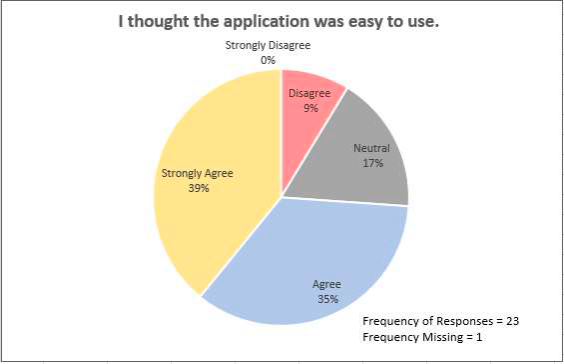
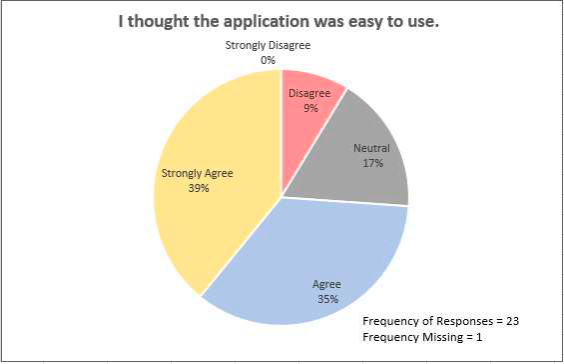
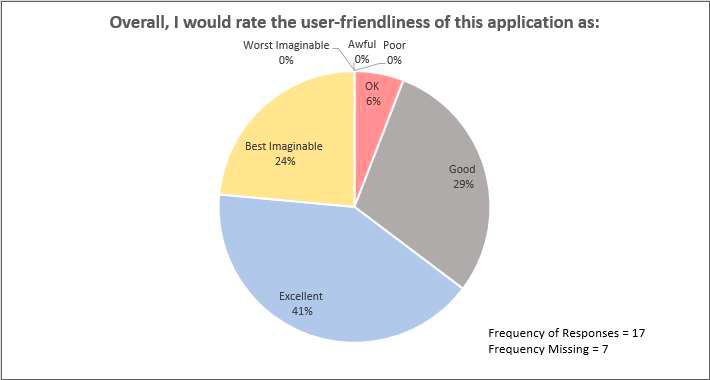
In the final surveys, adolescents also reported on the usability of the web app:

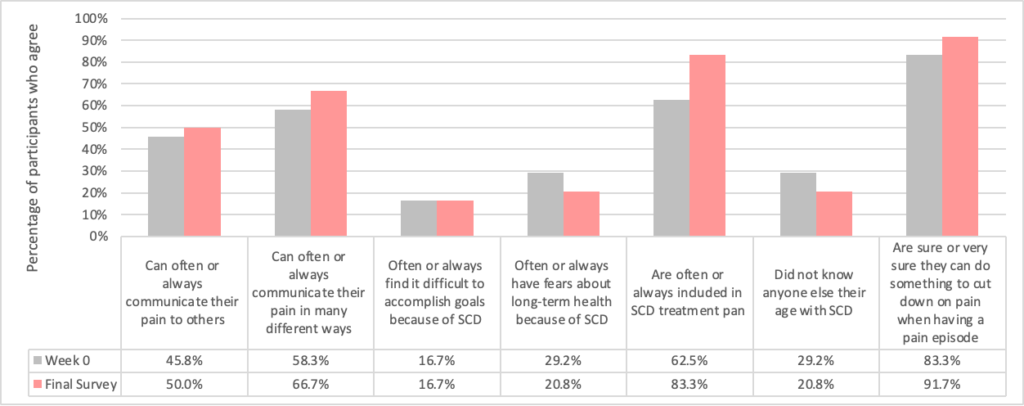
At the baseline and the final survey time points, adolescents reported on communication and SCD pain management:

Lastly, web app usage data was collected. From the 24 adolescents randomized, 34 pain reports were entered by 16 unique users (67%) within the app. Of those pain reports recorded, 20 (59%) were shared with their parent or health care provider via the app.

Pinpoint is available to individuals and medical providers. To learn more about the Pinpoint app, check out the video tutorial or visit HPC International.

Collaborator Spotlight:
Dr. Douglas Seals and Dr. Daniel Craighead

Collaborator Spotlight:
Dr. Douglas Seals and Dr. Daniel Craighead

Two accomplished integrative physiology scientists from the University of Colorado Boulder are launching a new research project in collaboration with Dr. Kayla Nuss and the Creative Team from Klein Buendel. The project will design and assess the feasibility of the using a smartphone app to help deliver a high-resistance inspiratory muscle strength training (IMST) program for improving blood pressure and reducing cardiovascular disease risk in midlife and older adults.

Douglas Seals, PhD, is a Distinguished Professor of Integrative Physiology (Boulder Campus) and Medicine (Anschutz Medical Campus) at the University of Colorado. He is also the Director of the Integrative Physiology of Aging Laboratory. He earned his doctoral degree in Applied Exercise Physiology from the University of Wisconsin in 1981. In his 35+ years of academics and research, Dr. Seals has become an expert on lifestyle and/or pharmacological interventions to improve cardiovascular function. His areas of research interest include cardiovascular aging, such as changes in systolic blood pressure, large artery stiffness, and vascular endothelial function; biological and lifestyle factors that influence cardiovascular aging; the integrative (molecular to systemic) mechanisms that mediate cardiovascular aging and its modulation by biological and lifestyle factors; and interventions to improve adverse physiological changes with aging, including cardiovascular dysfunction, reductions in motor performance, and impairments in cognitive function. His research has been continuously funded by research grants from the National Institutes of Health, particularly the National Institute on Aging, since 1986. Dr. Seals founded an NIH Clinical Translational Research Center at the University of Colorado Boulder in 1999 as a core facility for conducting biomedical research on human subjects. It was in this lab that Dr. Seals and Dr. Daniel Craighead (see below) established the efficacy of IMST for lowering blood pressure in a traditional clinical research setting. In 2004, Dr. Seals received a 10-year MERIT Award from the National Institute on Aging to support his research on cardiovascular aging. In 2008, he was named a Professor of Distinction in the College of Arts and Sciences at the University of Colorado Boulder. In 2013, he was named an Edward F. Adolph Distinguished Lecturer by the American Physiological Society for his work in the physiology of aging.

Daniel Craighead, PhD, is an Assistant Research Professor in the Department of Integrative Physiology at the University of Colorado Boulder. He earned his doctoral degree in Kinesiology from Penn State University in 2017, and completed a post-doctoral fellowship in the Integrative Physiology of Aging Laboratory at the University of Colorado Boulder in 2020. Dr. Craighead is a specialist in the study of IMST for lowering blood pressure. Dr. Craighead conducted the initial R21-supported clinical trial on IMST, upon which the new research project with Klein Buendel is based. The Small Business Technology Transfer (STTR) Phase I study is supported by the National Heart, Lung, and Blood Institute, and will design and assess the feasibility of a smartphone app for delivering an IMST program and improving blood pressure in midlife and older adults. The program will provide instruction and promote adherence to the IMST intervention. Ultimately, the app will provide for widespread dissemination and adoption of an innovative tool to easily lower blood pressure and reduce cardiovascular disease risk. Dr. Craighead also has been the Principal Investigator on a study assessing the efficacy of nicotinamide riboside, a dietary supplement, for lowering blood pressure and improving vascular function in older adults, among other research projects.

IMST for Reducing High Blood Pressure

IMST for Reducing High Blood Pressure

Midlife and older adults exhibit a rapid increase in systolic blood pressure (SBP) which is associated with an increased risk for cardiovascular diseases. Researchers at the University of Colorado Boulder recently established the clinical efficacy of high-resistance inspiratory muscle strength training (IMST), a novel form of physical training with minimal barriers to adherence, for lowering SBP in midlife and older adults in a clinical trial with regular clinic-based, researcher-supervised training.

A new Phase I STTR project seeks to leverage the growing field of digital health technologies by taking the first steps in developing a feasible and acceptable smartphone app that independently guides users through a high-resistance IMST program, a key step to translate IMST for widespread use and improving public health.

The research grant has been awarded to Klein Buendel and will be led by experts in cardiovascular health, aging and high-resistance IMST from the University of Colorado Boulder (Dr. Douglas Seals, Principal Investigator; Dr. Daniel Craighead, Co-Investigator) and digital health technology development and delivery from Klein Buendel (Dr. Kayla Nuss, Co-Investigator). The one-year project will collect feedback and preferences from potential users to guide app development and demonstrate feasibility of such a mobile app.

Specific Aims

Aim 1: Perform iterative focus groups in midlife/older adults with above-normal SBP to collect potential-user information to identify needs and preferences for effective IMST app design.

Aim 2: Design the conceptual model and develop planned app components, including printed wireframes, storyboards, and clickable wireframes.

Aim 3: Conduct beta and usability testing on the clickable wireframes to show feasibility, acceptability, and potential for engagement, and finalize IMST app design.

Successful completion of this Phase I study will provide evidence to support programming and evaluating the full-scale IMST app in a subsequent Phase II project. If awarded, the Phase II project would directly compare the efficacy of at-home, self-guided IMST with the app vs. home BP monitoring alone (usual care control) for lowering SBP in a randomized clinical trial. The ultimate research goal of Phases I and II is to produce a commercially-ready mobile app for at-home implementation of high-resistance IMST, as a cost-effective lifestyle intervention for lowering SBP, decreasing disease risk, and reducing health care costs.

The research is supported by a grant from the National Heart, Lung, and Blood Institute at the National Institutes of Health (HL167375; Dr. Douglas Seals, Principal Investigator).