Browsed by
Tag: alcohol

Noncompliance with laws to prevent polysubstance misuse

Noncompliance with laws to prevent polysubstance misuse

The effectiveness of statutes to combat hazardous polysubstance use (for example, alcohol and cannabis together) has rarely been evaluated. A multi-institutional team led by Klein Buendel researchers assessed compliance with a state law prohibiting recreational cannabis sales to apparently intoxicated customers in one of the first states to legalize cannabis sales. The assessment has been published in Alcohol: Clinical and Experimental Research.

In January to June 2024, pseudo-patrons visited 189 recreational cannabis stores twice in two large metropolitan areas and attempted to purchase cannabis while displaying alcohol intoxication behaviors. Observers recorded whether sellers were willing to sell the product along with characteristics of the stores (busyness, cleanliness, and signage) and cannabis sellers (sex, race and ethnicity, and age). Neighborhood characteristics by U.S. census tract were obtained (income, race, and ethnicity; population density). Sex and race and ethnicity of the pseudo-patrons, and extent and type of intoxication cues, were recorded. Descriptive statistics and logistic regression were used to describe the sales rate and predictors of the sales rate.

Assessments were completed at 173 stores. Sellers were willing to sell cannabis to pseudo-intoxicated buyers at 255 of 346 visits (73.7%). Sellers refused buyers at both visits in 6.9% of stores but in 54.3% were willing to sell at both visits. Sellers refused cannabis sales at higher rates in stores with signs saying, “no sales to intoxicated customers” (34.3%), particularly when buyers displayed more obvious signs of intoxication (39.8%).

Low compliance with the state regulation possibly occurred because sellers were unaware of the law, perceived little deterrence by the law, or lacked the skills to recognize and refuse intoxicated customers. Noncompliance with the law on selling cannabis to apparently alcohol-intoxicated customers increases the risks of polysubstance impairment and harm.

This research is supported by a grant from the National Institute on Alcohol Abuse and Alcoholism (AA031591; Dr. W. Gill Woodall and Dr. David Buller, Multiple Principal Investigators). Additional collaborating authors include Dr. Robert Saltz from the Pacific Institute for Research and Evaluation; Dr. James Fell from Fell Consulting; Dr. Gary Cutter from the University of Alabama; and Lila Martinez, Amanda Brice, and Noah Chirico from Klein Buendel.

B-SMART App for DWI Offenders and Family Reduced Alcohol Use and Ignition Interlock Device Lockouts

B-SMART App for DWI Offenders and Family Reduced Alcohol Use and Ignition Interlock Device Lockouts

Driving while intoxicated (DWI) remains a preventable source of morbidity and mortality in the United States. Ignition interlock devices (IIDs) are used to prevent DWI offenders from driving while intoxicated during a mandated installation period and are effective during that time. Once IIDs are removed, DWI rates are like levels of offenders who had no IID.

Researchers at Klein Buendel and the University of New Mexico have published the results of a study that tested the efficacy of a new smartphone app (B-SMART) for DWI offenders with an IID and concerned family members, with the goal of reducing IID alcohol consumption and lockout events. The full paper with methods, analyses, and results has been published in the Journal of Studies on Alcohol and Drugs.

Four B-SMART app modules were developed: 1) Life with Interlock, 2) Supporting Changes in Drinking, 3) Doing Things Together, and 4) Effective Communication. Participants (pairs of DWI offenders and concerned family members) were randomly assigned to receive the B-SMART app (n=58) or referral to a state IID information page, considered usual and customary care (n=65), and followed for nine months. IID data (failed tests and lockout events) were obtained from IID providers as the primary outcome variables. Offender and CFM reports of alcohol consumption in the last 30 days prior to assessment were secondary measures.

IID data were collected on 62% (n=76) of participants. B-SMART participants had significantly fewer lockout events than usual and customary care participants. B-SMART offenders and their concerned family members reported significantly less likelihood of DWI offender drinking at the 9-month follow-up.

Results suggest the B-SMART app reduced DWI offender alcohol consumption and IID lockout events. These outcomes are important because fewer IID lockout events predict lower DWI recidivism.

This research was supported by a grant from the National Institute on Alcohol Abuse and Alcoholism (AA022850; Dr. W. Gill Woodall, Principal Investigator). Collaborators on this paper include Dr. Barbara McCrady and Dr. Vern Westerberg from the University of New Mexico; and Julia Berteletti, Lila Martinez, Marita Brooks, and Noah Chirico from Klein Buendel; and Thomas Starke from Impact DWI. The B-SMART app was developed by the Creative Team at Klein Buendel.

Proximity of Alcohol Establishments and Sales of Cannabis to Intoxicated Customers

Proximity of Alcohol Establishments and Sales of Cannabis to Intoxicated Customers

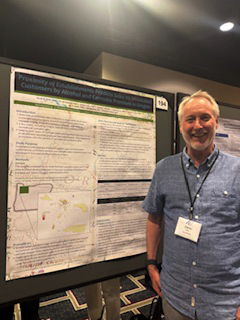
A multi-disciplinary research team led by Klein Buendel presented data from an active polysubstance (alcohol and cannabis) project at the 48th Annual Research Society on Alcohol Scientific Meeting on June 21-25, 2025 in New Orleans, Louisiana.

Dr. David Buller presenting poster

State laws prohibiting sales of alcohol to apparently intoxicated customers are intended to prevent morbidity/mortality from impaired driving, impulsive behaviors, injuries, and violence. A few states (including Oregon) have similar prohibitions for recreational cannabis sales. Compliance with state prohibitions against sales to intoxicated customers by co-located alcohol and cannabis sales establishments was examined in two metropolitan areas in Oregon.

In 2024, actors trained to feign alcohol intoxication visited state-licensed recreational cannabis stores in four counties containing Portland and Salem metropolitan areas and attempted to purchase a low-cost cannabis product while displaying alcohol intoxication. These same actors assessed sales of alcohol products at licensed on-site and off-site alcohol premises located near cannabis stores, using the pseudo-patron protocol. Concordance in refusals (1=both establishments refused vs. 0=else) and concordance in sales (1=both sold vs. 0=else) and point-to-point distances (in kilometers) between alcohol premises and each cannabis store were calculated.

Pseudo-patron teams consisting of a buyer feigning intoxication and an observer assessed 173 cannabis stores and 39 alcohol premises, resulting in 6,747 pairs of establishments. Logistic regression revealed that concordance in refusals (regulatory compliance) was higher in pairs of establishments that were located closer together rather than farther apart. Concordance in sales (regulatory non-compliance) was higher in pairs of establishments that were farther apart rather than closer together, even when examining pairs within the same city and county.

Neighborhood influences on alcohol and cannabis use may arise from the consistency of responsible sales behavior of co-located retailers. When both alcohol and cannabis establishments fail to refuse sales to intoxicated customers, use of alcohol and cannabis and accompanying harms may increase, especially from co-use which can result in high impairment. Community norms associated with, for example, social class or presence of children or regulators’ enforcement efforts may determine similarity in compliance. Responsible vendor training requirements or additional enforcement efforts might reduce co-location effects (neighborhood differences). The small number of alcohol premises and single state somewhat limited the study.

Smartphone Web App for DWI Offenders and Families

Smartphone Web App for DWI Offenders and Families

Driving while intoxicated (DWI) results in significant morbidity and mortality. The use of vehicle ignition interlock devices decreases the risk of drinking and driving while installed, but DWI rates increase after the devices are removed. Dr. W. Gill Woodall, Klein Buendel Senior Scientist, and his research collaborators have developed and tested the B-SMART smartphone web app to continue to support offenders and their concerned family members after their ignition interlock devices have been removed. They have published their methods and results of usability testing online in the Journal of Substance Use and Addiction Treatment.

Formative data collection for app development occurred in two phases. Phase 1 included key informant interviews with DWI offenders and concerned family members, development of one app module, and usability testing. Phase 2 included focus groups with DWI offenders and concerned family members, development of three more app modules, and usability testing. The Bangor System Usability Scale was used to rate app usability and satisfaction.

Results of key informant interviews and focus groups indicated that offenders and family members lacked information and were frustrated by the ignition interlock device, experienced financial burden from the DWI and the device, viewed supportive communication and positive shared activities as important, and were positive about the app. The four modules developed were Life with Interlock, Supporting Changes in Drinking, Doing Things Together, and Effective Communication. Each module included an introduction, at least one interactive activity, a video, and text to summarize what was presented. The content of the app modules was written primarily for the concerned family members. Usability testing indicated that the B-SMART modules were easy to use and informative.

The paper published online in the Journal of Substance Use and Addiction Treatment details the research measures, methods, analyses. A diagram describes the flow for the features and design of the app. This careful formative work resulted in an app responsive to the concerns of DWI offenders with ignition interlock devices and their concerned family members.

The authors believe that harnessing the power of the family to help the offender maintain a pattern of driving when not impaired may yield longer, successful outcomes initiated by the ignition interlock device. A future paper will report the efficacy of the B-SMART app after its implementation and testing in a rigorous randomized trial.

This research was supported by a grant from the National Institute on Alcohol Abuse and Alcoholism (AA022850; Dr. W. Gill Woodall, Principal Investigator). Collaborators included Dr. Barbara McCrady, Dr. Randall Starling, and Dr. Vern Westerberg from the University of New Mexico; Mr. Thomas Starke from Impact DWI in Sante Fe, New Mexico; and Ms. Julia Berteletti, Ms. Marita Brooks, and Ms. Lila Martinez from Klein Buendel. The B-SMART app was developed by the Creative Team at Klein Buendel.

#4Corners4Health: Protocol for a Randomized Stepped-Wedge Trial

#4Corners4Health: Protocol for a Randomized Stepped-Wedge Trial

Dr. David Buller from Klein Buendel and Dr. Andrew Sussman from the University of New Mexico are leading a large multiple state research team on the design, implementation, and evaluation of #4Corners4Health. The research study aims to decrease cancer risk factors among emerging adults (ages 18-26) living in rural counties in the Four Corners states of Arizona, Colorado, New Mexico, and Utah using a targeted social media campaign. The team has published a full description of their study procedures in JMIR Research Protocols.

Many emerging adults are prone to making unhealthy choices, which increase their risk of premature cancer morbidity and mortality. In the era of social media, rigorous research on interventions to promote health behaviors for cancer risk reduction among emerging adults delivered over social media is limited. Cancer prevention information and recommendations may reach emerging adults more effectively over social media than in settings such as health care, schools, and workplaces, particularly for emerging adults residing in rural areas.

Specifically, the research team will recruit a sample of 1000 emerging adults aged 18 to 26 years residing in rural counties in the Four Corners states from the Qualtrics’ research panel and enroll them in a randomized stepped-wedge, quasi-experimental design. The inclusion criteria include English proficiency and regular social media engagement. A social media intervention will promote guideline-related goals for increased physical activity, healthy eating, and HPV vaccination and reduced nicotine product use, alcohol intake, and solar UV radiation exposure. Posts will cover digital and media literacy skills, responses to misinformation, communication with family and friends, and referral to community resources. The intervention will be delivered over 12 months in Facebook private groups and will be guided by advisory groups of community stakeholders and emerging adults and focus groups with emerging adults. The emerging adults will complete assessments at baseline and five additional data after randomization. Assessments will measure six cancer risk behaviors, theoretical mediators, and participants’ engagement with the social media campaign.

The trial is being led by a steering committee. Team members are working in three subcommittees to optimize community engagement, the social media intervention, and the measures to be used. The Stakeholder Organization Advisory Board and Emerging Adult Advisory Board were formed and provided initial input on the priority of cancer risk factors to target, social media use by emerging adults, and community resources available. A framework for the social media intervention with topics, format, and theoretical mediators has been created, along with protocols for social media management.

In summary, the researchers believe that social media can be used as a platform to counter misinformation and improve reliable health information to promote health behaviors that reduce cancer risks among emerging adults. Because of the popularity of web-based information sources among emerging adults, an innovative, multiple risk factor intervention using a social media campaign has the potential to reduce their cancer risk behaviors.

This research is supported by a 5-year R01 grant from the National Cancer Institute (CA268037) to Klein Buendel. Dr. David Buller from Klein Buendel and Dr. Andrew Sussman from the University of New Mexico are the project’s Multiple Principal Investigators. The JMIR publication has 24 collaborating authors from multiple institutions.