Browsed by
Tag: Law Compliance

Noncompliance with laws to prevent polysubstance misuse

Noncompliance with laws to prevent polysubstance misuse

The effectiveness of statutes to combat hazardous polysubstance use (for example, alcohol and cannabis together) has rarely been evaluated. A multi-institutional team led by Klein Buendel researchers assessed compliance with a state law prohibiting recreational cannabis sales to apparently intoxicated customers in one of the first states to legalize cannabis sales. The assessment has been published in Alcohol: Clinical and Experimental Research.

In January to June 2024, pseudo-patrons visited 189 recreational cannabis stores twice in two large metropolitan areas and attempted to purchase cannabis while displaying alcohol intoxication behaviors. Observers recorded whether sellers were willing to sell the product along with characteristics of the stores (busyness, cleanliness, and signage) and cannabis sellers (sex, race and ethnicity, and age). Neighborhood characteristics by U.S. census tract were obtained (income, race, and ethnicity; population density). Sex and race and ethnicity of the pseudo-patrons, and extent and type of intoxication cues, were recorded. Descriptive statistics and logistic regression were used to describe the sales rate and predictors of the sales rate.

Assessments were completed at 173 stores. Sellers were willing to sell cannabis to pseudo-intoxicated buyers at 255 of 346 visits (73.7%). Sellers refused buyers at both visits in 6.9% of stores but in 54.3% were willing to sell at both visits. Sellers refused cannabis sales at higher rates in stores with signs saying, “no sales to intoxicated customers” (34.3%), particularly when buyers displayed more obvious signs of intoxication (39.8%).

Low compliance with the state regulation possibly occurred because sellers were unaware of the law, perceived little deterrence by the law, or lacked the skills to recognize and refuse intoxicated customers. Noncompliance with the law on selling cannabis to apparently alcohol-intoxicated customers increases the risks of polysubstance impairment and harm.

This research is supported by a grant from the National Institute on Alcohol Abuse and Alcoholism (AA031591; Dr. W. Gill Woodall and Dr. David Buller, Multiple Principal Investigators). Additional collaborating authors include Dr. Robert Saltz from the Pacific Institute for Research and Evaluation; Dr. James Fell from Fell Consulting; Dr. Gary Cutter from the University of Alabama; and Lila Martinez, Amanda Brice, and Noah Chirico from Klein Buendel.

Proximity of Alcohol Establishments and Sales of Cannabis to Intoxicated Customers

Proximity of Alcohol Establishments and Sales of Cannabis to Intoxicated Customers

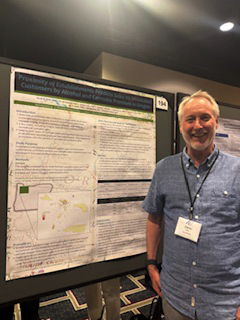
A multi-disciplinary research team led by Klein Buendel presented data from an active polysubstance (alcohol and cannabis) project at the 48th Annual Research Society on Alcohol Scientific Meeting on June 21-25, 2025 in New Orleans, Louisiana.

Dr. David Buller presenting poster

State laws prohibiting sales of alcohol to apparently intoxicated customers are intended to prevent morbidity/mortality from impaired driving, impulsive behaviors, injuries, and violence. A few states (including Oregon) have similar prohibitions for recreational cannabis sales. Compliance with state prohibitions against sales to intoxicated customers by co-located alcohol and cannabis sales establishments was examined in two metropolitan areas in Oregon.

In 2024, actors trained to feign alcohol intoxication visited state-licensed recreational cannabis stores in four counties containing Portland and Salem metropolitan areas and attempted to purchase a low-cost cannabis product while displaying alcohol intoxication. These same actors assessed sales of alcohol products at licensed on-site and off-site alcohol premises located near cannabis stores, using the pseudo-patron protocol. Concordance in refusals (1=both establishments refused vs. 0=else) and concordance in sales (1=both sold vs. 0=else) and point-to-point distances (in kilometers) between alcohol premises and each cannabis store were calculated.

Pseudo-patron teams consisting of a buyer feigning intoxication and an observer assessed 173 cannabis stores and 39 alcohol premises, resulting in 6,747 pairs of establishments. Logistic regression revealed that concordance in refusals (regulatory compliance) was higher in pairs of establishments that were located closer together rather than farther apart. Concordance in sales (regulatory non-compliance) was higher in pairs of establishments that were farther apart rather than closer together, even when examining pairs within the same city and county.

Neighborhood influences on alcohol and cannabis use may arise from the consistency of responsible sales behavior of co-located retailers. When both alcohol and cannabis establishments fail to refuse sales to intoxicated customers, use of alcohol and cannabis and accompanying harms may increase, especially from co-use which can result in high impairment. Community norms associated with, for example, social class or presence of children or regulators’ enforcement efforts may determine similarity in compliance. Responsible vendor training requirements or additional enforcement efforts might reduce co-location effects (neighborhood differences). The small number of alcohol premises and single state somewhat limited the study.