Browsed by
Tag: Melanoma

Skin Cancer Genetic Testing Research

Skin Cancer Genetic Testing Research

Klein Buendel Director of Research, Dr. David Buller, is a co-author on two recent publications reporting the results of studies on genetic testing and treatment decision-making for melanoma patients. Both papers report finding from a study directed by Dr. Jennifer Hay from the Memorial Sloan Kettering Cancer Center in New York and Dr. Marianne Berwick from the University of New Mexico.

Behavioral and Psychological Outcomes Associated with Skin Cancer Genetic Testing

The first paper has been published in the journal Cancer (Basel). The study investigated genomic testing of the common melanocortin-1 receptor (MC1R) gene for skin cancer risk in a randomized controlled trial in primary care settings in Albuquerque, New Mexico. Study participants were randomized 5:1 to a MC1R test invitation or usual care. Three-month sun protection, skin cancer screening, and skin cancer worry outcomes associated with testing, and key effect moderators (such as cancer risk perceptions, and skin cancer risk factors) were assessed.

Full research methods and results are reported in the publication and show that the primary outcomes were unchanged by the MC1R test offer, test acceptance, and level of risk feedback. Moderator analyses results are also presented in the publication. “Risk feedback did not prompt cancer worry, and average risk feedback did not erode existing sun protection,” according to the authors. More study is needed in the understanding and development of tailored strategies to address low skin cancer risk awareness and genetic testing.

This research was supported by the National Cancer Institute (CA181241; Jennifer Hay and Marianne Berwick, Multiple Principal Investigators). Collaborators include Kimberly Kaphingst from the University of Utah; David Buller from Klein Buendel; Elizabeth Schofield and Yuelin Li from the Memorial Sloan Kettering Cancer Center; Kirsten Meyer White from the New Mexico VA Health System; Andrew Sussman, Dolores Guest, Yvonne Dailey, Erika Robers, Matthew Schwartz, and Keith Hunley from the University of New Mexico.

Effect of Superstitious Beliefs and Risk Intuitions on Genetic Test Decisions

The second paper has been published in the journal Medical Decision Making. The study investigated cognitive causation, or superstitious thinking, and negative affect in risk as predictors of MC1R (moderate v. high risk) skin cancer genetic testing and responses to the testing.

Nearly 500 participants completed baseline assessments using validated measures of cognitive causation (beliefs that thinking about cancer risk increases cancer likelihood) and negative affect in risk (negative feelings generated during risk perception) and subsequently received a test offer. Participants could access a website to learn about and request genetic testing. Those who completed genetic testing for skin cancer completed assessments of cognitive and affective reactions two weeks after testing.

Methods, assessment measures, and full results are reported in the publication. In summary, negative affect in risk did not hamper test information seeking, but did inhibit the uptake of genetic testing. Those with higher cognitive causation showed more fear regarding their test result.

This research was supported by the National Cancer Institute (CA181241; Jennifer Hay and Marianne Berwick, Multiple Principal Investigators). Collaborators include Kristen Riley from Rutgers University; Andrew Sussman, Dolores Guest, Yvonne Dailey, Matthew Schwartz, and Keith Hunley from the University of New Mexico; Elizabeth Schofield from the Memorial Sloan Kettering Cancer Center; David Buller from Klein Buendel; and Kimberly Kaphingst from the University of Utah.

Health Literacy and Genomic Testing for Melanoma

Health Literacy and Genomic Testing for Melanoma

Dr. David Buller, Klein Buendel’s Director of Research, is a co-author on a paper published recently in Patient Education and Counseling that examines how health literacy skills impact primary care patients’ understanding of melanoma genetic testing results. The paper’s lead author is Dr. Kimberly Kaphingst from the Huntsman Cancer Institute and the Department of Communication at the University of Utah. Additional co-authors are from the Memorial Sloan Kettering Cancer Center in New York, and the Department of Internal Medicine at the University of New Mexico.

Making a significant health decision can be burdensome. It involves obtaining, processing, and weighing an abundance of new information. Personal health literacy skills may help lighten the load. According to the U.S. Department of Health and Human Services, “personal health literacy is the degree to which individuals have the ability to find, understand, and use information and services to inform health-related decisions and actions for themselves and others.”

The Patient Education and Counseling paper describes the methods and measures used to examine whether health literacy skills, educational attainment, or melanoma risk were related to patients’ short-term cognitive and affective responses to personal melanoma genetic test results. Cognitive responses that were measured included perceived clarity and believability of the test results, and how often respondents thought about the test results. Affective reactions that were assessed included things like confusion, fear, hopefulness, relief, and regret, among others. Study results, conclusions, limitations, and implications are reported in the publication. Overall, the authors report that some individuals may need assistance in understanding genetic information related to melanoma risk.

This research was supported by the National Cancer Institute (CA181241; Dr. Jennifer Hay and Dr. Marianne Berwick, Multiple Principal Investigators) and the Huntsman Cancer Foundation.

Melanoma Receptor Variation in a New Mexico Population

Melanoma Receptor Variation in a New Mexico Population

Dr. David Buller, KB Senior Scientist and Director of Research, is a co-author on a paper published recently in Cancer Epidemiology, Biomarkers & Prevention. The paper examines the Melanocortin 1 Receptor (MC1R) in a multicultural New Mexican population. MC1R is a risk factor for developing melanoma skin cancer because it contributes to skin pigmentation. The paper’s lead author is Dr. Kirsten White from the University of New Mexico. Other co-authors are from the Memorial Sloan Kettering Cancer Center in New York, the University of Utah, and the University of New Mexico.

Specifically, single-nucleotide polymorphisms (SNPs) in MC1R and their association with race and ethnicity, skin type, and perceived cancer risk were evaluated by genotyping MC1R in 191 primary care clinic patients in Albuquerque, New Mexico. A full description of the methods, results, conclusions, and limitations of the research can be found in the publication.

Overall, the authors concluded that a specific variant of interest in MC1R may not be a risk factor for melanoma among New Mexican Hispanics, and that genetic risk cannot be inferred from Northern European populations directly to non-European populations.

Sun Safety Curriculum for Grades K-5 is Now Free for Schools

Sun Safety Curriculum for Grades K-5 is Now Free for Schools

Sunny Days Healthy Ways, an evidence-based sun safety curriculum that provides sun protection education for grades K-5, is now available free online by its authors at Klein Buendel, Inc. Schools can use the curriculum to fulfill the school-based goals of the Surgeon General’s Call to Action to Prevent Skin Cancer.

“I was inspired to remove any barriers to schools having access to the curriculum by previous Surgeon General Dr. Boris Lushniak’s impassioned presentation at the 4th Annual Conference on UV and Skin Cancer Prevention,” explained Mary Buller, President of Klein Buendel.

Sunny Days Healthy Ways provides an average of 15 lessons per grade, that teachers can tailor to their timeframe and needs. Prepared lesson plans, student activity sheets, storybooks, learning objectives, and common core standards minimize prep time and make teaching students about sun safety easy. Project-based learning and technology connections make it fun.

Skin cancer is the most common cancer in the U.S. and is increasing at an alarming rate. Even though skin cancer occurs mainly in adults, much of the damage was likely done during childhood. Long periods of unprotected sun exposure and severe sunburning as a child can lead to skin cancer and eye damage later in life. Good health habits started in childhood are more likely to last a lifetime.

Sunny Days Healthy Ways was first created and evaluated with research grants from the National Cancer Institute (CA62968 & CA23074) and the Arizona Disease Control Research Commission (9403). To access the free curriculum, visit the Sunny Days Healthy Ways website at https://www.sdhw.info/.

Effect of an Occupational Skin Cancer Prevention Program on Employee Sun Safety Practices

Effect of an Occupational Skin Cancer Prevention Program on Employee Sun Safety Practices

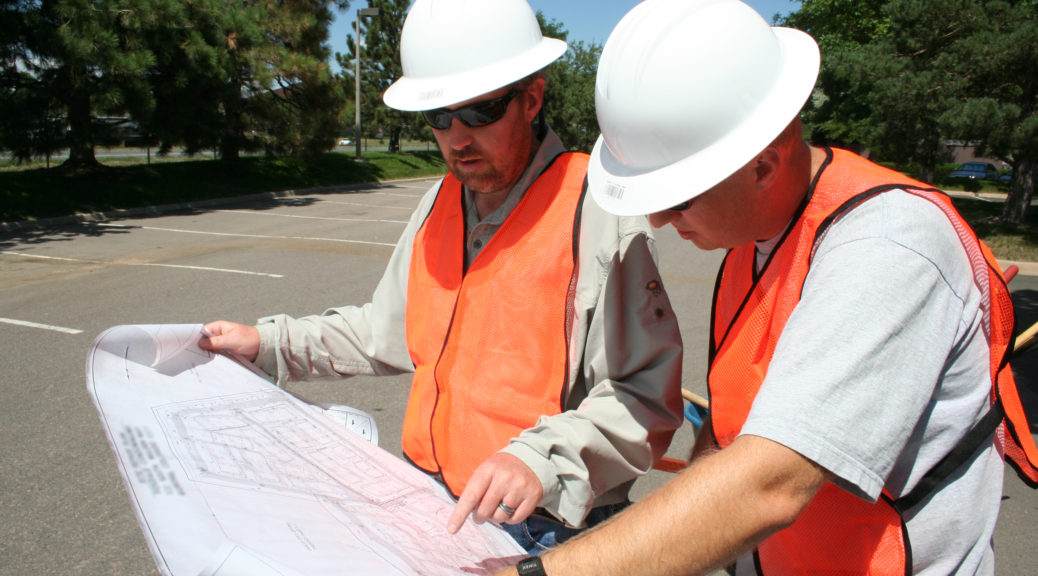
Exposure to the sun’s UV rays is the biggest risk factor for skin cancer. It is also the easiest risk factor to modify through practicing sun-safe behaviors. Outdoor workers are at an elevated risk for skin cancer, especially melanoma, due to the amount of UV exposure they endure over the years. In a recent ePub-ahead-of-print paper in the Journal of Occupational and Environmental Medicine, Klein Buendel’s Dr. Barbara Walkosz, Dr. David Buller, Ms. Mary Buller and their co-authors discuss the outcomes of the follow-up assessment to Sun Safe Workplaces, a workplace sun safety program that promoted sun safety policy adoption and education.

Two years after the Sun Safe Workplaces intervention, a follow-up assessment was conducted to determine the impact of the program on employee sun safety behavior. All participants of the original intervention (n=98) were invited to partake in the two-year assessment and 63 (n=33 for intervention, n=30 for control) participated. The sample included local government organizations throughout Colorado with outdoor workers in at least one of the following service areas: parks and recreation, public works, and public safety. Project staff visited each employer to evaluate the sun protection policies in place, sun protection messages, and personal sun protection equipment available at each organization. An assessment of the sun safety policies was conducted that included three domains (administrative procedures, environmental controls, and personal protection practices) with 15 content categories. Additionally, policy implementation was measured through senior manager and line supervisor reports on whether or not employers communicated or provided training about sun safety to employees and/or provided any of the types of the recommended personal sun protection equipment for employees (sunscreen, wide-brimmed hats, sunglasses, long-sleeved shirts, long pants, or outdoor shade). Lastly, key contact managers were asked to assist study staff with distributing self-administered surveys to front-line supervisors and employees who worked outdoors, which included time spent outdoors at work, frequency of sun protection at work, prevalence of sunburn in the past 12 months on the job, attitudes toward occupational sun safety and self-efficacy for sun safety on the job, attitudes toward workplace health and sun safety policy, and job and demographic information. A total of 1,784 (n=913 for intervention, n=871 for control) outdoor workers completed surveys.

Results showed that compared to control workplaces, employees in the intervention workplaces reported more sun protection practices overall as well as more frequent use of sunscreen on the body, wearing of wide-brimmed hats, and more often had sunscreen, sunglasses, and a hat with them when at work. Employees in the intervention workplaces also reported fewer sunburns than those in the control workplaces. Additionally, sun protection messages and equipment, as well as employee training in sun safety, were more likely to occur in intervention workplaces and such actions increased the frequency of employees having sunscreen, sunglasses, and a hat on the job.  For employees at employers with a best-practice policy, the total composite sun safety score was significantly higher than in the no-policy group and employees also reported more frequent use of sunscreen on the face and other exposed body parts and having sunscreen, sunglasses, and a hat with them while at work compared to those at no-policy employers. However, unlike the intervention group, there was no effect of policy on the prevalence of sunburns among the employees.

The authors concluded that policy adoption is an important step towards improving sun protection and preventing sunburns on the job for outdoor workers but recommend that a robust approach that includes a policy, training for employees, and personal protection equipment that can support sun safety is needed to effectively change employees’ sun protection behaviors.

This research was funded by a grant from the National Cancer Institute at the National Institutes of Health (RO1CA134705; Dr. David Buller and Dr. Barbara Walkosz, Principal Investigators). Coauthors included Ms. Mary Buller, Dr. Alan Wallis from University of Colorado Denver, Dr. Richard Meenan from the Kaiser Permanente Center for Health Research, Dr. Gary Cutter from Pythagoras, Dr. Peter Andersen from San Diego State University, and Dr. Michael Scott from Mikonics.


Skin Cancer Awareness and the Great Outdoors

Skin Cancer Awareness and the Great Outdoors

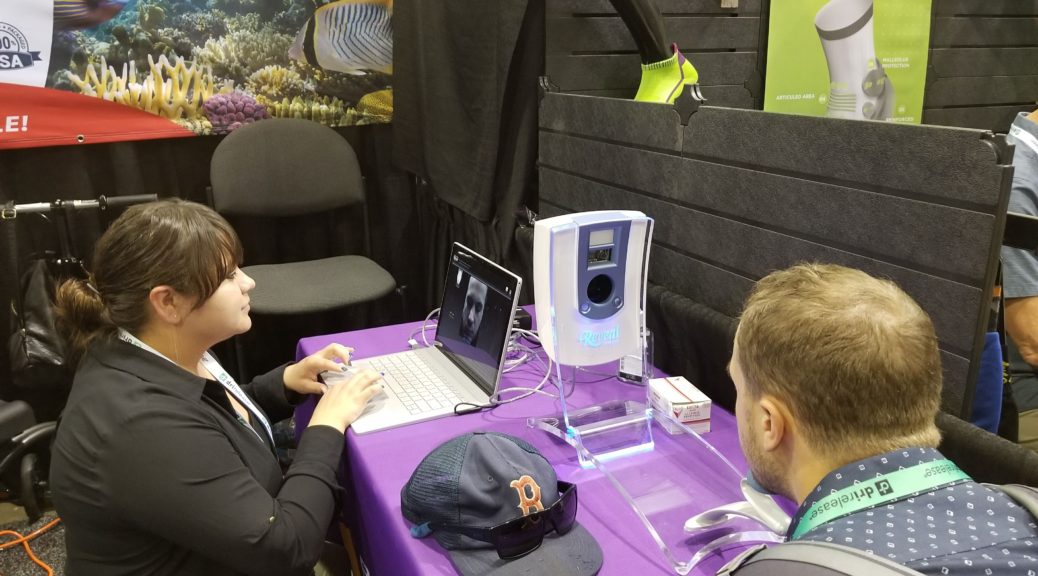
In July, Klein Buendel (KB) teamed up with the Colorado Skin Cancer Task Force (CSCTF) and Rocky Mountain Sunscreen (RMS) for the first time in the summer to raise awareness about UV radiation and skin cancer prevention at the new-to-Denver Outdoor Retailer Summer Market at the Colorado Convention Center.

For nearly a decade, KB and the CSCTF partnered with RMS at the winter SnowSports Industries America Snow Show every January to show outdoor retailers that practicing sun safety is just as important in the winter months as in the summer months. Now we can access hundreds of outdoor retailers in the summer months in Denver, too, with the arrival of the Outdoor Retailer Summer Market.

Skin cancer prevention is particularly relevant for members of the outdoor retailer industry because they work and promote recreation in high UV environments, like mountains, deserts, lakes, and oceans. In addition to providing sun safety and skin cancer awareness information, the booth offered a unique opportunity for attendees to have a UV-damage photograph taken of their face with the Reveal Imager. The Reveal Imager by Canfield has the ability to capture damage caused by the sun’s UV rays that are invisible to the naked eye. Participants reported that seeing this type of photograph of themselves is a helpful visual reminder to practice sun safety all year long to reduce their risk of additional sun damage.

Per their website, “the Outdoor Retailer Summer Market is North America’s largest tradeshow in the outdoor industry drawing attendees from around the world. Summer Market is all about face-to-face—it’s where products are shown, orders are written, new accounts are found, connections are made and brands are launched. This show is about buying, sourcing, strategic meetings, trend, education and networking with decision makers, influencers, stakeholders, key buyers and athletes that influence the outdoor market.”

Over the course of the multi-day event, KB staff took dozens of photographs with the UV camera. Other members of the CSCTF (including Colorado dermatologists and dermatology interns) answered questions, distributed sun safety materials, and performed skin examinations. This event is part of the annual outreach and education efforts of the CSCTF. KB has been an active member of the CSCTF for over 10 years.

Uptake of MC1R Testing for Melanoma Risk

Uptake of MC1R Testing for Melanoma Risk

The use of personalized medicine or tailoring medicine based on sequencing and analyzing an individual’s DNA, is drastically changing cancer research and treatment, risk assessment and clinical practices1, and skin cancer is one area being affected by this research.2 Currently, melanoma in U.S. Hispanic populations is on the rise and despite melanoma being more common in Caucasians than Hispanics, a melanoma diagnosis is more likely to be fatal for Hispanics.3

In a study recently published in JAMA Dermatology, several researchers (lead author Dr. Jennifer Hay) including Dr. David Buller from Klein Buendel, examined interest and uptake, as well as demographic and skin cancer risk factor covariates of interest and uptake, of the melanocortin-1 receptor gene (MC1R) saliva test among 499 adult participants recruited from diverse clinics in Albuquerque, New Mexico. Forty-four percent (44%) of participants were non-Hispanic white, 48% were Hispanic, and all were registered clinic patients for longer than six months, were 18-years of age or older, and spoke English or Spanish fluently. A study website log-in was given to participants to give them the option to log on and read three educational modules presenting the rationale and pros and cons of MC1R testing.

Results showed that almost 50% (n=232) of participants logged on to the website and that non-Hispanic whites and those with higher education were more likely to do so. Furthermore, participants with a history of sunburn and with at least one first-degree relative were also more likely to log on to the website. Of those who logged on, almost 90% (n=204) decided to request testing and a little over 80% (n=167) of those who requested testing returned the kit. Non-Hispanic whites and older participants had a higher rate of returning the kit.

Authors cite the large, diverse sample and the behavioral outcomes versus self-reported outcomes as strengths of the study while citing the single location and use of one primary care health system for recruitment as a limitation on generalizability. Lastly, authors conclude by calling for future research in socioeconomic and demographic discrepancies in interest and uptake of genetic testing in order to ensure ease of availability of genetic information seeking in the general population.

References

  1. Orchard C. Genomic medicine in the real world: “hope” and “hype”. Harvard T.H. Chan School of Public Health Web site. Available at: https://www.hsph.harvard.edu/ecpe/genomic-medicine-in-the-real-world-hope-and-hype/. Published June 1, 2015. Accessed June 20, 2018.
  2. Genetics of skin cancer (PDQ) – health professional version: genetic testing. National Cancer Institute Web site. Available at: https://www.cancer.gov/types/skin/hp/skin-genetics-pdq#link/_393_toc. Updated June 14, 2018. Accessed June 20, 2018.
  3. Perez MI. Hispanics get skin cancer, too. Skin Cancer Foundation Web site. Available at: https://www.skincancer.org/prevention/are-you-at-risk/hispanic. Published May 25, 2016. Accessed June 20, 2018.
Interdisciplinary Perspectives on Sun Safety

Interdisciplinary Perspectives on Sun Safety

Skin cancer is the most common cancer in the United States, with more than 5 million new cases diagnosed per year.1 As part of an effort to reduce incidence and mortality from skin cancer, the National Academy of Sciences hosted 19 experts from a variety of healthcare fields (including dermatology, behavioral medicine, public health, adolescent medicine, clinical health psychology, anthropology, and kinesiology). The experts, including Klein Buendel’s Director of Research, Dr. David Buller, met for two days in December 2016 to identify emerging themes in skin cancer prevention and control.

The report of this interdisciplinary collaboration and its five main culminating themes were published in JAMA Dermatology, a monthly peer-reviewed medical journal published by the American Medical Association.

The Emerging Themes for Skin Cancer Prevention and Control

  1. Expanding the definition of risk in order to better tailor sun safety programs, create guidelines that acknowledge the beneficial effects of ultraviolet radiation (UVR) exposure and develop strategies that involve those from diverse backgrounds (e.g. lower socioeconomic status, those with darker skin).
  2. Intertwining sun protection strategies and messages with other health-related strategies and messages, such as physical activity recommendations, in order to prevent increasing a person’s risk for one disease despite decreasing it for another.
  3. Tailoring sun safety messages using multiple components (e.g. place, weather, personal values, individual risk factors and motivations) to better persuade individual behavior change through novel channels such as smartphones and social media platforms.
  4. Recognizing excessive tanning as an addiction in order to enable proper education for clinicians to give a diagnosis and create more effective treatments, including the possibility for pharmacological treatments.
  5. Scaling up evidence-based interventions to increase the impact and achieve population-level skin cancer prevention through identifying the most appropriate dissemination and implementation methods that are also cost-effective, wide-reaching and lead to behavior change.

Authors, including Dr. Buller, conclude by stating that future expert meetings should focus on sun protection in the pediatric population and that future research to address these themes will need to be interdisciplinary to decrease the burden of skin cancer.

References

  1. American Cancer Society. Cancer Facts & Figures 2018. Available at: https://www.cancer.org/content/dam/cancer-org/research/cancer-facts-and-statistics/annual-cancer-facts-and-figures/2018/cancer-facts-and-figures-2018.pdf. 2018. Accessed June 11, 2018.
Skin Cancer Prevention Messages on Facebook

Skin Cancer Prevention Messages on Facebook

Social media use among American adults has grown over the years – from just 5-in-10 in 2011 to seven-in-ten in 2018 – and reasons for using social media range from connecting with others to accessing news content to sharing information.1 With skin cancer still the most common among all cancers,2 it seems logical to use social media to promote and spread skin cancer prevention awareness. But is it effective?

In a recently published article in the Journal of the American Academy of Dermatology, KB’s Dr. Barbara Walkosz and Rachel Eye, along with other collaborators, aimed to review and classify skin cancer prevention messages from non-profit organizations on Facebook to determine which types garnered high engagement, such as likes, comments, and shares. Messages were identified using the following keywords: “skin cancer prevention,” “melanoma,” “melanoma prevention,” and “sun safety.” From May 2014 to May 2015, Facebook pages of 24 skin cancer groups’ and their 824 Facebook messages were coded for the following content: message format (narrative or didactic), motivation (skin cancer risk or appearance), persuasive appeal (social norm, fear, humor, altruism, celebrity story), behavioral target (sunscreen, hats, shade, avoid sunburn, indoor or outdoor tanning, skin exams), imagery, image content, and hyperlink. Engagement and frequency of message types were also determined.

Authors found that the majority of messages were didactic and focused on skin cancer occurrence and type but note that these approaches are not always effective in producing behavior change. Furthermore, the top three behavioral targets addressed were skin exams, indoor and outdoor tanning, and sunscreen use. Messages that were more didactic, appearance-based, myth-busting, used celebrity endorsements, and targeted self-exams received the most engagement. Messages without images received a higher rate of likes, shares and comments compared with messages that included images.

Limitations of the study include the inability to determine if those following the pages studied are representative of populations at risk for skin cancer and the potential of missed messages based on the keywords used for inclusion criteria. Authors state that collaborations between health institutes and researchers could identify characteristics of messages that are both effective for behavior change and produce high engagement rates in order to have the greatest impact on skin cancer prevention.

References

  1. Social media fact sheet. Pew Research Center Web site. Available at: http://www.pewinternet.org/fact-sheet/social-media/. Published February 5, 2018. Accessed April 24, 2018.
  2. Key statistics for melanoma skin cancer. American Cancer Society Web site. Available at: https://www.cancer.org/cancer/melanoma-skin-cancer/about/key-statistics.html. Updated January 4, 2018. Accessed April 24, 2018.
Effects of the Sun Safe Workplaces Program

Effects of the Sun Safe Workplaces Program

Occupational skin cancer prevention is an international priority. People who work outdoors are routinely exposed to high levels of ultraviolet radiation (UV), the primary risk factor for skin cancer. Dr. Barbara Walkosz from Klein Buendel presented findings from the Sun Safe Workplaces project and a follow-up assessment at the 68th Annual Conference of the International Communication Association in Prague, Czech Republic, May 24-28, 2018.

Sun Safe Workplaces (SSW) was a communication theory-based workplace sun safety program for public organizations that employ people who work outdoors. Examples of outdoor work include road and bridge work, parks and recreation facilitation, sanitation and water works, and public safety. The original SSW project promoted the adoption of workplace sun safety policies in the public organizations and provided training in personal sun protection for outdoor workers in a randomized controlled trial. The follow-up study assessed the impact of SSW on employee sun safety behavior.

Sixty-one of the 98 public employers from the original study participated. Managers and line supervisors reported program implementation. A total of 1,784 outdoor workers (913 from the intervention group and 871 from the control group) completed surveys on personal sun protection practices.

In summary, employees’ sun protection improved statistically significantly in the intervention group receiving the SSW program. SSW’s effect on employee sun protection was mediated by the number of workplace actions to implement elements of sun safety policy including sun protection messages and equipment in the workplace and employee reports of training in sun safety.

This research was funded by a grant from the National Cancer Institute (RO1CA187191; Dr. David Buller, Principal Investigator). In addition to Dr. Walkosz and Dr. Buller from Klein Buendel (KB), collaborators/co-authors included Mary Buller from KB; Dr. Allan Wallis from the University of Colorado Denver; Dr. Richard Meenan from the Kaiser Permanente Center for Health Research; Dr. Michael Scott from Mikonics, Inc.; Dr. Peter Andersen from San Diego State University; and Dr. Gary Cutter from the University of Alabama, Birmingham.