Browsed by
Tag: Research

KB Research Presented at SBM

KB Research Presented at SBM

*Klein Buendel authors are bolded.

Title: Applying Body Neutrality Principles to Physical Activity Promotion: A Pilot Test of the Body Neutrality Playbook 

Presenter: Dr. Kayla Nuss 

Collaborators: Anne Poirier, Amanda Brice, Sierra Held, Taylor Sullivan, Noah Chirico

This pilot study examined preliminary effects of the Body Neutrality Playbook on physical activity behavior, Self-determination Theory (SDT) motivation, and body image–related constructs in women insufficiently active at baseline. 

Body image concerns and weight stigma can undermine motivation for physical activity, particularly among women not meeting public health recommendations. The Body Neutrality Playbook is a six-week, self-guided workbook grounded in body neutrality principles, designed to promote sustainable physical activity by fostering autonomous motivation, self-compassion, and body appreciation while reducing harmful appearance-based cognitions. 

Twenty adult women completed the Body Neutrality Playbook over six weeks. Measures were collected at baseline and post-intervention, including self-reported weekly minutes of moderate-to-vigorous physical activity (MVPA), physical activity intention, physical activity planning, SDT-based motivation (intrinsic, integrated, identified, introjected, external), basic psychological needs satisfaction (competence, autonomy, relatedness), body functionality appreciation, body compassion (body kindness, motivated action, common humanity), internalized weight bias, and physical appearance comparison. Analyses examined mean change scores and Cohen’s d effect sizes to assess preliminary intervention impact. 

Post-intervention, participants demonstrated meaningful increases in MVPA minutes per week, physical activity intention, and physical activity planning. SDT outcomes showed increased competence and autonomy, decreased introjected regulation, and increased integrated regulation and intrinsic motivation. Body image–related outcomes indicated increases in body appreciation, decreases in physical appearance comparison, and improvements in two of three body compassion subscales (body kindness and motivated action). Effect sizes for these changes were in the small-to-large range, suggesting practical significance despite the small sample. 

Preliminary findings suggest the Body Neutrality Playbook may promote both autonomous physical activity motivation and positive body image while reducing appearance-based self-comparisons among women who are insufficiently active. The combination of body neutrality principles and SDT-informed behavior change strategies may address both psychological and behavioral barriers to physical activity. Future research with larger, more diverse samples and a controlled design is warranted to evaluate efficacy and mechanisms of change. 

This research was sponsored by Klein Buendel and led by Dr. Kayla Nuss. Anne Poirier is from Shaping Perspectives.

Title: Delivering online parent training program usage data in real-time: the iterative development of an administrative dashboard  

Presenter: Julia Berteletti 

Collaborators: Dr. Susie Breitenstein, Dr. Nathan Helsabeck, Dr. Kayla Herbell, Charlie Barger, Alishia Kinsey 
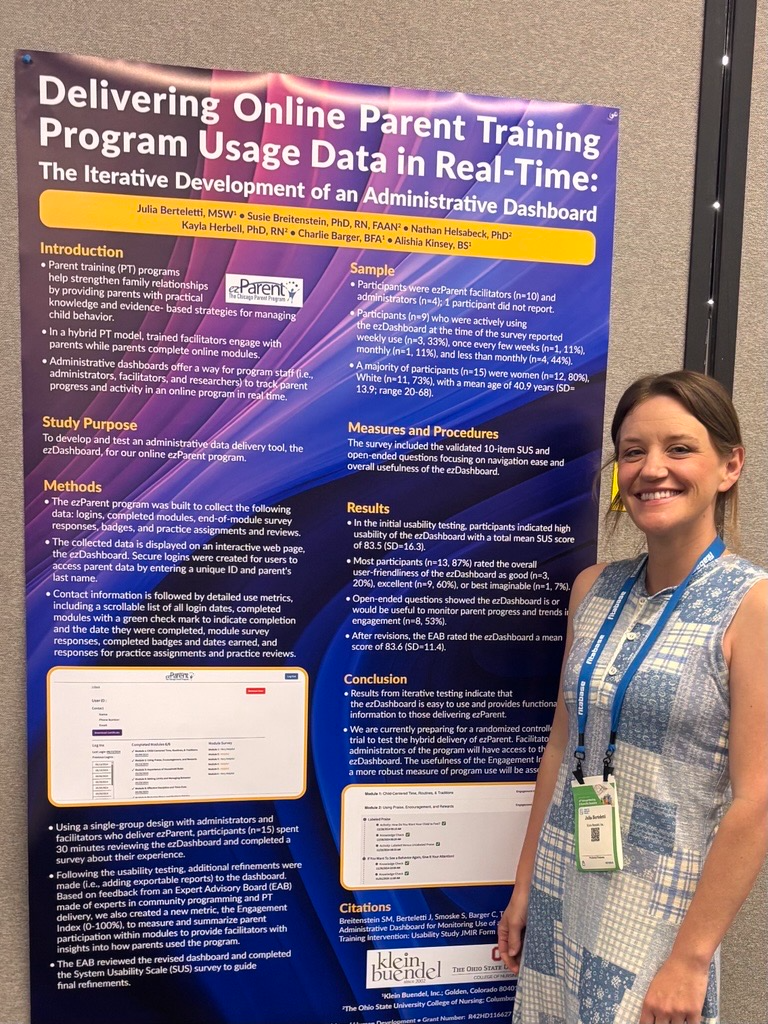
Julia Berteletti

Online parent training programs help strengthen parent-child relationships by providing parents with practical knowledge and evidence-based strategies for managing child behavior. In a hybrid parent training model, facilitators engage with parents while parents complete online modules. Administrative dashboards offer an integrated platform for program staff (administrators, facilitators, researchers) to track parent progress and activity in online parent training modules in real time. 

The research team iteratively developed and tested an administrative data delivery dashboard of the online ezParent Parent Training program. Using a single-group design with administrators and facilitators who deliver ezParent, 15 participants spent 30 minutes reviewing the ezDashboard and completed a survey about their experience. The survey included the validated 10-item System Usability Scale (SUS) and open-ended questions focusing on navigation ease and overall usefulness of the ezDashboard. Following the usability testing, we made additional refinements (adding exportable reports) to the dashboard. Based on feedback from an Expert Advisory Board (EAB) made of experts in community programming and parent training delivery, we also created a new metric, the Engagement Index, to measure and summarize parent participation within modules to provide facilitators with insights into how parents used the program. The EAB reviewed the revised dashboard and completed the SUS survey. Final refinements have been completed. 

In the initial usability testing, participants indicated high usability of the ezDashboard with a total mean SUS score of 83.5. Most participants (n=13, 87%) rated the overall user-friendliness of the ezDashboard as good (n=3, 20%), excellent (n=9, 60%), or best imaginable (n=1, 7%).  Open-ended questions showed the ezDashboard is or would be useful to monitor parent progress and trends in engagement (n=8, 53%). To facilitate that, we created the Engagement Index (0-100% per module) to assist facilitators’ understanding of how parents interact with ezParent. After revisions, the EAB rated the ezDashboard as 83.6. 

Results from iterative testing indicate that the ezDashboard is easy to use and provides functional information to those delivering ezParent.  Next, the ezDashboard will be used in a randomized controlled trial testing hybrid delivery of ezParent. The usefulness of the Engagement Index as a more robust measure of program use will be assessed.  

This STTR grant was awarded to Klein Buendel by the Eunice Kennedy Shriver National Institute of Child Health and Human Development (HD116627; Dr. Susan Breitenstein, Principal Investigator from Ohio State University). Research collaborators include Julia Berteletti from Klein Buendel, and Dr. Amie Bettencourt and Dr. Deborah Gross from Johns Hopkins University.

The ezParent technology was designed and programmed by the Creative Team at Klein Buendel. 

2025 Research Highlights

2025 Research Highlights

In 2025, Klein Buendel scientists and staff pursued rigorous behavioral science research with numerous national collaborators. Our Creative Team designed and engineered multiple web-based programs to positively impact the health and safety of people’s everyday lives. Our Research Team started three new research projects with current and new collaborators. We published 17 research papers in peer-reviewed journals, including the American Journal of Public Health, and our research was presented at four national conferences.

In February, Dr. David Buller was an invited presenter at the Policy-based Research Workshop sponsored by New York University. His presentation was entitled “Research on Implementation of Alcohol and Cannabis Sales Policies.”

In April, the Creative Team’s development of the electronic version of the STAC bystander anti-bullying intervention for middle school students was illuminated in a life-size digital graphic LUMINARY presentation of the STAC-T Program at Boise State University.

  1. “No Weigh Body Neutrality.” A Phase I SBIR award from the Eunice Kennedy Shriver National Institute of Child Health and Human Development (DK142209; Dr. Kayla Nuss, Principal Investigator, Klein Buendel). 
  2. The Phase II Project of “Hybrid Delivery to Increase Access and Sustainability: Evaluating ezParent Implementation.” A Fast Track STTR grant to Klein Buendel from the National Institute (HD116627; Dr. Susan Breitenstein, Principal Investigator, Ohio State University). The primary Co-Investigator from Klein Buendel is Ms. Julia Berteletti.
  3. An Administrative Supplement was awarded to “Policy and training intervention in responsible marijuana sales practices to reduce the risk of selling to intoxicated customers.” A 5-year R01 grant from the National Institute on Alcohol Abuse and Alcoholism (AA031591; Dr. W. Gill Woodall and Dr. David Buller, Multiple Principal Investigators). 
  • Dr. Anne Poirier, a nationally recognized body image expert and the author of The Body Joyful and Not a Fat Annie; and
  • Dr. Susan Breitenstein from Ohio State University; and
  • Dr. Robert Saltz from the Prevention Research Center at the Pacific Institute for Research and Evaluation.
  1. McCrady BS, Woodall WG, Berteletti J, Starling R, Martinez L, Westerberg V, Brooks M, Starke T. Developing a smartphone web app to help DWI offenders and their families. J Subst Use Addict Treat. 2025 Jan:168:209565. doi: 10.1016/j.josat.2024.209565.
  2. Heckman CJ, Mitarotondo A, Buller D, Berteletti J, Schroth KRJ, Stapleton JL, Dellavalle RP, Balk SJ, Hudson SV. Analysis of facilitators of and barriers to enactment of state regulation of indoor tanning by minors, Transl Behav Med. 2025 Jan 16;15(1):ibaf044. doi: 10.1093/ tbm/ ibaf044.
  3. Nuss K, Jones ED, Brice AN, Udovich CC, Fullmer SE, Freeberg KA, McCarty NP, Seals DR, Craighead DH. Feasibility and design of a novel smartphone app to deliver blood pressure-lowering high-resistance inspiratory muscle strength training. Mhealth. 2025 Jan;11:6. doi:10.21037/mhealth-24-33.
  4. Buller DBBerteletti J, Heckman C, Schroth KRJ, Gellar AC, Stapleton JL, Adjei A, Mitarotondo Am Guild SR, Gershenwald JE, Dellavalle D, Pagoto S. Bills to restrict access to and harm from indoor tanning facilities in US state legislatures, 1992‒2023. Am J Public Health. 2025 Feb;115(2):191-200. doi:10.2105/AJPH. 2024. 307894.
  5. Nuss K, Berteletti JWalkosz BAdjei ISmall ABeltran LSChirico N, Poirier A, Arigo D. What is in a hashtag? A comparative content analysis of fitspiration, body positivity, and body neutrality posts on Instagram. Psychol Pop Media. 2025 Feb;14(4):560-571. doi: 10.1037/ppm0000585. 
  6. Midgett A, Doumas DM, Peralta C, Peck M, Reilly B, Buller MK. Usability testing of a bystander bullying intervention for rural middle schools: Mixed methods study. JMIR Hum Factors. 2025 Feb;12: e67962. doi: 10.2196/67962. 
  7. Salafia C, Banerjee S, Hamilton JG, Schofield E, Yuelin L, Buller DB, Hunley K, Sussman AL, Guest DD, Kaphingst KA, Berwick M, Hay JL. Salafia C, Banerjee S, Hamilton JG, et al. Prospective changes in primary care patients’ family communication after skin cancer genetic test offer. PEC Innov. 2025 Jun;7:100409. doi:10.1016/j.pecinn.2025.100409.
  8. Nuss K, Brice A, Hebert C, Nauta P, Stull AJ, Swift DL, Griffith DM, Buller DB, Newton RL Jr. A culturally tailored mHealth intervention (MobileMen app) to promote physical activity in African American men: Protocol for a comparative effectiveness trial. JMIR Res Protoc. 2025 Jul;14:e67809. doi:10.2196/67809.
  9. Meenan R, Buller DB, Berteletti J, Henry KL, Buller MK, Cutter GR, Pagoto S, Adjei I, Chirico N. Economic evaluation of two scalability strategies for nationwide dissemination of an occupational sun safety intervention in a randomized trial. J Occup Environ Med. 2025; 67(7):498-506. doi: 10.1097/JOM.0000000000003390.
  10. Buller DBKinsey A, Sullivan T, Gruetter P, Morrisey-Basler MC, Buller ID, Heckman CJ. Descriptive analysis of municipal policies addressing shade in eight southwest and northeast states in the United States. Front Public Health. 2025 Jul 14:13:1565251. doi: 10.3389/fpubh.2025.1565251.  eCollection 2025. PMCID: PMC12302959.
  11. Brice ANFullmer SBarger CSerbinski JGallik M, Nauta P, Swift DL, Stull AJ, Buller DB, Griffith DM, Nuss K, Newton RL Jr. MobileMen: the development of a mobile application to promote physical activity in African American men. Mhealth. 2025 Jul 14;11:32. doi: 10.21037/mhealth-24-82. eCollection 2025. 
  12. Manne SL, Kashy DA, Pagoto S, Peterson SK, Heckman CJ, Gallo J, Berger A, Buller DB, Kulik A, Frederick S, Pesanelli M. Engagement in and correlates of total cutaneous exams and skin self-exams among young melanoma survivors and their family. J Behav Med. 2025 Oct;48(5):834-847. doi:10.1007/s10865-025-00589-4. 
  13. Woodall WGBuller DB, Zimet G, Kong AS, Reither J, Chilton L, Martinez L, Brooks M, Chirico N, Ginossar T. TeenVac.org: A mobile web app to improve human papillomavirus vaccine uptake for adolescent boys. J Adolesc Health. 2025 Oct;77(4):749-755. doi: 10.1016/j.jadohealth.2025.06.015. 
  14. Doumas DM., Midgett A, Hausheer R, Winburn A, Buller M, Perron T, Shelton J, Herbeck B. Acceptability, relevance, and short-term outcomes of the STAC-T bullying bystander app: Feasibility quantitative study. JMIR Form Res. 2025 Nov 18:9:e76830. doi: 10.2196/76830. 
  15. Saltz R, Paschall MJ, O’Hara S, Buller DB, Woodall WG, Martinez L. Mandatory responsible beverage service training in California associated with higher refusals of service to apparently intoxicated patrons. J Stud Alcohol Drugs. 2025 Nov:10.15288/jsad.25-00161. doi: 10.15288/jsad. 25-00161.

*KB investigators and staff are indicated in bold type  

Multiple presentations on research progress, procedures, analyses, and outcomes were given by Klein  Buendel scientists, staff, and their collaborators at the following national conferences: 

  • 46th Annual Meeting of the Society of Behavioral Medicine (March) 
  • 48th Annual Scientific Meeting of the Research Society on Alcohol (June) 
  • Gerontological Society of America Annual Scientific Meeting (November) 
  • 18th Annual Conference of the Science of Dissemination and Implementation in Health (December) 

2024 Research Highlights

2024 Research Highlights

Klein Buendel scientists and staff continued to pursue rigorous behavioral science research with multiple national and international collaborators to positively impact the health and safety of people’s lives. Our creative team designed and engineered engaging web-based programs for many of the projects.

In 2024, we started two new large research projects with current collaborators. We co-authored 11 papers published in peer-reviewed journals or published online ahead of print, including one in the American Journal of Public Health. We presented study results at five national or international conferences, including the 6th International Conference on UV and Skin Cancer Prevention in Brisbane, Australia, where we were awarded the Best Poster prize along with our research collaborator, Emory University.

In February, Dr. Gill Woodall gave a presentation at the University of New Mexico Comprehensive Cancer Center entitled, “Randomized Trials of HPV Vaccine Uptake Improvement in New Mexico: Web Apps for Parents and Young Adolescent Girls and Boys.”

In May, Dr. David Buller gave a presentation for the ACCORDS Dissemination and Implementation Science Program at the University of Colorado Anschutz Medical Campus. His presentation was entitled, “Novel Adaptation of an Evidence-based Occupational Sun Safety Program for Today’s Outdoor Worker.”

In October, Dr. David Buller was an invited presenter on a panel discussion on increasing scale-up research in cancer control, sponsored by the National Cancer Institute. His presentation was entitled “Using Technology to Scale-up and Occupational Sun Protection Program.” 

  1. “Emotion Regulation Intervention to Prevent Substance Use Among Youth in the Child Welfare System.” An R61 award to Klein Buendel from the National Institute on Drug Abuse (DA059785; Dr. Chris Houck, Principal Investigator, Rhode Island Hospital). The primary Co-Investigator from Klein Buendel is Ms. Julia Berteletti.
  2. “Hybrid Delivery to Increase Access and Sustainability: Evaluating ezParent Implementation.” A Fast Track STTR grant to Klein Buendel from the National Institute (HD116627; Dr. Susan Breitenstein, Principal Investigator, Ohio State University). The primary Co-Investigator from Klein Buendel is Ms. Julia Berteletti.
  1. Woodall WG, Buller DB, Saltz R, Martinez L. Professional development to improve responsible beverage service training: formative research results and protocol for a randomized controlled trial. JMIR Res Protoc. 2024 Jan 24:13:e49680. doi: 10.2196/49680.
  2. Breitenstein SM, Berteletti J, Smoske S, Barger C, Tipps K, Helsabeck NP. Administrative dashboard for monitoring use of a web-Based parent training intervention: usability study. JMIR Form Res. 2024 Jan 30:8:e53439. doi: 10.2196/53439.
  3. Buller DB, Sussman AL, Thomson CA, Kepka D, Taren D, Henry KL, Warner EL, Walkosz BJ, Woodall GW, Nuss K, Blair CK, Guest DD, Borrayo EA, Gordon JS, Hatcher J, Wetter DW, Kinsey A, Jones CF, Yung AK, Christini K, Berteletti J, Torres JA, Perez EYB, Small A. #4Corners4Health social media cancer prevention campaign for emerging adults: protocol for a randomized stepped-wedge trial. JMIR Res Protoc. 2024 Feb 22:13:e50392. doi: 10.2196/50392.
  4. Wu YP, Stump TK, Hay JL, Buller DB, Jensen JD, Grossman D, Shen J, Haaland BA, Jones J, Tercyak KP. Protocol for a cluster-randomized trial of a school-based skin cancer preventive intervention for adolescents. Contemp Clin Trials. 2024 May:140:107494. doi: 10.1016/ j.cct.2024.107494.
  5. Hay JL, Wu Y, Schofield E, Kaphingst K, Sussman AL, Guest DD, Hunley K, Li Y, Buller DB, Berwick M. Exploring the role of cancer fatalism and engagement with skin cancer genetic information in diverse primary care patients. Psychooncology. 2024 Apr;33(4):e6331. doi: 10.1002/pon.6331.
  6. Buller DB, Woodall WG, Saltz R, Martinez L, Small A, Chirico N, Cutter GR. Sales to apparently intoxicated customers in three states with different histories of responsible beverage service training. J Stud Alcohol Drugs. 2024 May;85(3):312-321. doi: 10.15288/jsad.23-00258
  7. Kitt-Lewis E, Loeb SJ, Walkosz BJ, Olanreqaju SA, Herbeck B, Fullmer S. Just Care: usability testing of e-learning modules for peer caregivers living in prison. J Offender Rehabil. 2024 Jul;63(6):387-400. Doi: 10.1080/10509674.2024.2370289.
  8. Buller DB, Buller MK, Meenan R, Cutter GR, Berteletti J, Henry KL, Kinsey A, Adjei I, Chirico N. Implementation of an occupational sun safety intervention: comparison of two scalability strategies. J Occup Environ Med. 2024 Oct 10. doi: 10.1097/JOM.0000000000003248. Online ahead of print.
  9. Wu YP, Brunsgaard EK, Siniscalchi N, Stump T, Smith H, Grossman D, Jensen J, Buller DB, Hay JL, Shen J, Haaland BA, Tercyak KP. Challenges and lessons learned in recruiting participants for school-based disease prevention programs during COVID-19. Contemp Clin Trials Commun. 2024 Nov 24:42:101399. doi: 10.1016/j.conctc.2024.101399. eCollection 2024 Dec.
  10. McCrady BS, Woodall WG, Berteletti J, Starling R, Martinez L, Westerberg V, Brooks M, Starke T. Developing a smartphone web app to help DWI offenders and their families. J Subst Use Addict Treat. 2025 Jan:168:209565. doi: 10.1016/j.josat.2024.209565. Online ahead of print.
  11. Buller DB, Berteletti J, Heckman C, Schroth K, Geller AC, Stapleton JL, Adjei I, Mitarotondo A, Guild SR, Gershenwald JE, Dellavalle R, Pagoto S. Bills to Restrict Access to and Harm from Indoor Tanning Facilities in US State Legislatures, 1992–2023. Am J Public Health. Online ahead of print 10.2105/AJPH.2024.307894.

*KB investigators and staff are indicated in bold type

Several presentations on research progress, procedures, analyses, and outcomes were given by Klein Buendel scientists, staff, and their collaborators at the following national and international conferences:

  • 45th Annual Meeting of the Society of Behavioral Medicine (March)
  • 36th Annual Scientific Sessions of the Eastern Nursing Research Society (April)
  • 47th Annual Scientific Meeting of the Research Society on Alcohol (June)
  • 6th International Conference on UV and Skin Cancer Prevention (September)
  • 36th International Papillomavirus Conference (November)

Klein Buendel and Emory University won Best Poster at the UV Conference in Australia for “Narrative Synthesis of Skin Cancer Prevention Interventions for Samples with High Proportions of Participants with Skin of Color in a Systematic Review.” The poster was presented by Ms. Irene Adjei from Klein Buendel.

2023 Research Highlights

2023 Research Highlights

Klein Buendel scientists and staff continued to pursue rigorous behavioral science research with numerous national and international collaborators. Our creative team also designed and engineered multiple web-based programs to positively impact the health and safety of people’s everyday lives.  

In 2023, we started three new research projects with diverse collaborators. We published (or e-published ahead of print) six research papers in peer-reviewed journals and six additional publications are in press for early 2024. We presented research analyses and outcomes at six national or international conferences.  

In March, Ms. Marita Brooks retired from Klein Buendel after working with Dr. Gill Woodall for over 30 years at the University of New Mexico (CASAA) and Klein Buendel (as a Senior Research Project Coordinator).  

In April, we hosted Ron Borland, PhD, FASSA, Professor of Psychology and Health Behavior from the University of Melbourne in Victoria, Australia. His focal presentation was entitled, “Can we eliminate smoking without embracing harm reduction?” 

In May, Dr. David Buller was a speaker at the 7th Annual Conference of the UCONN Center for Health and Social Media. His presentation was entitled, “How can public health better utilize social media? Challenges and opportunities.”  

In October, Dr. Buller participated in a panel discussion on measures, data sources, and data collection strategies at the New York University Policy-Focused Implementation Science Training. He discussed his research on responsible vendor practices and training in state-regulated alcohol markets aimed at reducing DUI and other harms of over-service of alcoholic beverages. 

In October, Dr. Buller also joined Carolyn Heckman from Rutgers University to present an update and preliminary findings from an investigation of state indoor tanning laws to the National Council for Skin Cancer Prevention. The presentation covered the nature of state laws, the political process that led to their passage or failure, and compliance with state regulations pertaining to minor access and other regulations on indoor tanning facilities. 

In December, Dr. Gill Woodall gave a presentation to the New Mexico Immunization Coalition. The presentation reviewed the effectiveness of the TeenVac web app on improved HPV vaccine uptake. 

Projects Launched in 2023 

  1. “Feasibility and design of a novel smartphone app to deliver blood pressure-lowering inspiratory muscle strength training.” Phase I STTR grant to Klein Buendel from the National Heart, Lung, and Blood Institute (HL167375; Dr. Douglas Seals, Principal Investigator, University of Colorado). The primary Co-Investigator from Klein Buendel is Dr. Kayla Nuss. 
  1. “Policy and training intervention in responsible marijuana sales practices to reduce the risk of selling to intoxicated customers.” A 5-year R01 grant from the National Institute on Alcohol Abuse and Alcoholism (AA031591; Dr. W. Gill Woodall and Dr. David Buller, Multiple Principal Investigators).  
  1. “Beyond Blame: Development of an online media literacy curriculum for violence prevention.” A Phase I SBIR grant from the Centers for Disease Control and Prevention (CE003635; Dr. Barbara Walkosz, Principal Investigator).  

For these new projects, we are collaborating with the following primary investigators, universities, and organizations: 

  • University of Colorado, Boulder (Dr. Douglas Seals) 
  • Pacific Institute for Research and Evaluation (Dr. Robert Saltz) 
  • NORC at the University of Chicago ((Mr. Jim Fell) 
  • Center for Media Literacy (Ms. Tessa Jolls) 

2023 Publications* 

  1. Manne S, Pagoto S, Peterson S, Heckman C, Kashy D, Berger A, Studts C, Megron R, Buller D, Paddock, Gallo, Kulik A, Frederick S, Pesanelli M, Domider M, Grosso M. Facebook Intervention for Young-Onset Melanoma Survivors and Families: Protocol for a Randomized Controlled Trial. JMIR Res Protoc. 2023 Jan 24;12:e39640. 
  1. Ray AE, Mun E, Lewis MA, Litt DM, Stapleton JL, Tan L, Buller DB, Zhou Z, Bush HM, Himelhoch S. Cross-Tailoring Integrative Alcohol and Risky Sexual Behavior Feedback for College Students: Protocol for a Hybrid Type 1 Effectiveness-Implementation Trial. JMIR Res Protoc. 2023 Mar 20:12:e43986. doi: 10.2196/43986. 
  1. Nuss K, Sui W, Rhodes R, Liu S. Motivational Profiles and Associations With Physical Activity Before, During, and After the COVID-19 Pandemic: Retrospective Study. JMIR Form Res. 2023 Apr 24;7: e43411. doi: 10.2196/43411. 
  1. Nuss K, Moore K, Marchant T, Courtney JB, Edwards K, Sharp JL, Nelson TL, Li K. The combined effect of motivational interviewing and wearable fitness trackers on motivation and physical activity in inactive adults: A randomized controlled trial. J Sports Sci. 2023 Mar 25:1-11. doi: 10.1080/02640414.2023.2195228. 
  1. Moore KN, Nuss K, Do B, Wang SD, Li K, Graham DJ, Dunton GF, Courtney JB. Motivational Profile as a Predictor of Physical Activity Among US Adults During the Early Months of the COVID-19 Pandemic: A Daily Diary Study. J Phys Act Health. 2023 Jul 28;20(10):963-970. doi: 10.1123/jpah.2022-0474. 
  1. Saltz R, Pashcall MJ, O’Hara S, Buller DB, Woodall WG, Martinez L. Serving alcohol to an “obviously intoxicated” patron. J Stud Alcohol Drugs. 2023 Dec 11. doi: 10.15288/jsad.23-00253. Online ahead of print. 

*KB investigators and staff are indicated in bold type  

2023 Conference Presentations 

Research progress, analyses, and outcomes were presented and disseminated by Klein Buendel scientists, staff, and their collaborators at the following national and international conferences in 2023: 

  • EUROGIN International Multidisciplinary HPV Congress (February)  
  • 44th Annual Meeting & Scientific Sessions of the Society of Behavioral Medicine (April) 
  • 46th Annual Scientific Meeting of the Research Society on Alcoholism (June) 
  • Custody and Caring: 18th Biennial International Conference on the Nurse’s Role in the Criminal Justice System (September) 
  • 14th Conference of the European Society for Prevention Research (October) 
  • 16th Annual Conference on the Science of Dissemination and Implementation in Health (December) 

2022 Research Highlights

2022 Research Highlights

Klein Buendel celebrated its 20th Anniversary in 2022! Our scientists and staff continued to pursue rigorous behavioral science research with numerous national and international collaborators. Our creative team designed and engineered multiple web-based programs to positively impact the health and safety of people’s everyday lives.

In 2022, we launched four new prime research projects and started two new subaward collaborations with Emory University and Harvard University. We published (or e-published ahead of print) ten research papers in peer-reviewed journals and presented research analyses and outcomes at eight regional, national or international conferences.

In February, a targeted version of our WayToServe responsible alcohol server training program was launched for the state of California by our licensee, Wedge Communications. WayToServe is now sold in Colorado, California, New Mexico, Oregon, and Washington.

In September, we welcomed a new Scientist, Dr. Kayla Nuss, to Klein Buendel. Dr. Nuss’ research interests center on motivation for physical activity, how wearable technology supports or thwarts motivation in various populations, and how to optimize wearable technology to support the development and maintenance of engagement in physical activity. Dr. Nuss graduated with a Ph.D. in Bioenergetics from Colorado State University in 2021.

In October, Dr. David Buller, Director of Research, participated in a discussion on responsible vendor practices for alcohol and cannabis sponsored by the New Jersey Prevention Network.  

In December, Dr. Barbara Walkosz, Senior Scientist, gave a presentation for NATO and the Center for Media Literacy. The webinar was about the pandemic, the dangers of misinformation, health communication, and media literacy.

Prime Projects Launched in 2022

“Computer-based Learning to Enhance ADRD Care in Prison: Just Care for Dementia.” Phase I STTR grant to Klein Buendel from the National Institute on Aging (AG078103; Dr. Susan Loeb from Penn State University, Principal Investigator).

“Translation of an In-Person Brief, Bystander Bullying Intervention (STAC) into a Technology-Based Program.” Phase II STTR grant to Klein Buendel from the National Institute on Minority Health and Health Disparities (MD014943; Dr. Aida Midgett from Boise State University, Principal Investigator).

“#4Corners 4Health: A Social Media Cancer Prevention Program for Rural emerging Adults.” R01 grant to Klein Buendel from the National Cancer Institute (CA268037; Dr. David Buller from Klein Buendel and Dr. Andrew Sussman from the University of New Mexico, Multiple Principal Investigators).

“An Interactive Education Program to Reduce High Risk Behavior in Adolescents.” Fast Track STTR grant to Klein Buendel from the Eunice Kennedy Shriver National Institute of Child Health and Human Development (HD110333; Dr. Christopher Houck from Lifespan Health Systems and Rhode Island Hospital, Principal Investigator).

For these new prime projects and two new subaward projects, we are collaborating with primary investigators from the following universities and organizations:

  • Boise State University
  • Colorado State University
  • Emory University
  • Georgetown University
  • Harvard University
  • Penn State University
  • Rhode Island Hospital/Lifespan Health Systems
  • University of Arizona
  • University of Colorado
  • University of New Mexico
  • University of Oregon
  • University of Utah

2022 Publications*

Buller DB, Pagoto S, Henry KL, Baker K, Walkosz BJ, Hillhouse J, Berteletti J, Bibeau J, Kinsey A. Persisting effects of a social media campaign to prevent indoor tanning: a randomized trial. Cancer Epidemiol Biomarkers Prev. 2022; 31(4):885-892.

Wallace GT, Buller DB, Pagoto S, Berteletti J, Baker KE, Mathis S, Henry KL. Nonmedical prescription drug use among female adolescents: the relative influence of maternal factors, social norms, and perceptions of risk and availability. Drugs (Abingdon, England). 2022. Published online ahead of print. doi: 10.1080/09687637.2022.2028727

Myers VH, Loeb S, Kitt-Lewis E, Jerrod T. Large-scale evaluation of a computer-based learning program to increase prison staff knowledge on geriatric and end-of-life care. Int J Prison Health. 2022. Published online ahead of print. doi: 10.1108/IJPH-08-2021-0078.

Greene MM, Schoeny ME, Berteletti J, Keim SA, Neel ML, Patra K, Smokse S, Breitenstein S. ezPreemie study protocol: a randomized controlled factorial trial testing web-based parent training and coaching with parents of children born very preterm. BMJ Open. 2022;12: e063706. doi: 10.1136/bmjopen-2022-063706.

Midgett A, Doumas DM, Buller MK. Posttraining outcomes, acceptability, and technology-based delivery of the STAC Bystander Bullying Intervention teacher module: mixed methods study. JMIR Form Res. 2022 Aug;6(8):e40022. doi: 10.2196/40022.

Buller DB, Pagoto S, Henry KL, Baker K, Walkosz BJ, Hillhouse J, Berteletti J, Bibeau J. Effects of engagement with a social media campaign for mothers to prevent indoor tanning by teens in a randomized trial. J Health Commun. 2022 Jun 3;27(6):394-406.

Buller D, Walkosz B, Henry K, Woodall WG, Pagoto S, Berteletti J, Kinsey A, DiVito J, Baker K, Hillhouse J. Promoting social distancing and COVID-19 vaccine intentions to mothers: randomized comparison of information sources in social media messages. JMIR Infodemiol. 2022 Jul-Dec;2(2):e36210. doi: 10.2196/36210.

Dobbinson SJ, Buller DB, Chamberlain JA, Simmons J, Buller MK. Solar UV measured under built-shade in public parks: findings from a randomized trial in Denver and Melbourne. Int J Environ Res Public Health. 2022 Aug 25:19(17):10583. doi: 10.3390/ijerph191710583.

Buller DB, Pagoto S, Walkosz BJ, Woodall WG, Berteletti J, Kinsey A, Henry K, DiVito J. The process of responding to COVID-19 misinformation in a social media feed. J Public Health Manag Pract. 2022. Published online ahead of print. doi: 10.1097/PHH.0000000000001679.

Houck C, Modrowski CA, Hadley W, Barker D, Myers V, Bala K, Wickham B, Jerrod T. A pilot study of a tablet-based emotion regulation intervention for early adolescents. J Dev Behav Pediatr. 2022 Oct/Nov;43(8):e505-e514(10). doi: 10.1097/DBP.0000000000001094.

*KB investigators and staff (current or at the time of the project) are indicated in bold type

2022 Conference Presentations

Research analyses and outcomes were presented and disseminated by KB scientists, staff, and their collaborators at the following national and international conferences in 2022:

  • 34th Annual Scientific Sessions of the Eastern Nursing Research Society (March/April)
  • 43rd Annual Meeting & Scientific Sessions of the Society of Behavioral Medicine (April)
  • 72nd Annual Conference of the International Communication Association (May)
  • 47th Annual Meeting of the Kettil Bruun Society for Social and Epidemiological Research on Alcohol (May/June)
  • 45th Annual Scientific Meeting of the Research Society on Alcoholism (June)
  • National Association of Media Literacy Education Conference (July)
  • State of the Science Congress on Nursing Research (September)
  • Mountain West CTR-IN Annual Meeting (November)
Collaborator Spotlight:
Dr. Carolyn Heckman

Collaborator Spotlight:
Dr. Carolyn Heckman

Dr. Carolyn J. Heckman is an Associate Professor of Medicine and Co-Leader of the Cancer Prevention and Control Program at the Rutgers Cancer Institute of New Jersey. She received a BA in Psychology from Brown University and PhD in Counseling Psychology from the University of Iowa. She completed a postdoctoral fellowship in health psychology and addictions at Virginia Commonwealth University. She is also a licensed psychologist.

Dr. Heckman has published more than 100 research papers and presented at many national and international conferences. Much of her work focuses on skin cancer prevention and detection. Her other interests include online interventions and tobacco use and cessation. She has been funded numerous times by the National Cancer Institute and has also received funding from the American Cancer Society and Pfizer, Inc.

In addition to her research, Dr. Heckman is a member of the NIH Community Level Health Promotion study section and she is on the Editorial Board of the journal Translational Behavioral Medicine. She is the Founder/Leader of the Cancer Institute of New Jersey’s Dissemination and Implementation Science Working Group. Dr. Heckman has served on several steering and advisory, grant review, search committee, training, and other committees and community groups. For example, she served as the National Chair of the Don’t Fry Day skin cancer prevention awareness campaign sponsored by the National Council on Skin Cancer Prevention.

Currently, Dr. Heckman is a Co-Investigator on a five-year R01 study called “A Multi-Level Investigation of U.S. Indoor Tanning Policy Enactment, Implementation, Compliance, Impact, and Economics” with Klein Buendel’s Dr. David Buller. The goals of this research project are to complete three specific aims: 1) conduct a comparative case study to elucidate the indoor tanning legislation adoption process; 2) use a pseudo-patron (confederate) assessment, national survey, and archival data to investigate indoor tanning legislation implementation, as well as indoor tanning and sunburn outcomes among adolescents and young adults; and 3) integrate data from the first two aims and external data to assess economic effects relevant to policy sustainability of indoor tanning stringency, enforcement, and compliance.

This image has an empty alt attribute; its file name is spotlight_text.jpg
Workplace Sun Safety Training Goes All-Virtual

Workplace Sun Safety Training Goes All-Virtual

People who work outdoors are exposed to high levels of solar ultraviolet radiation (UV) over a lifetime that can substantially increase their risk for developing skin cancer. Workplaces can be an effective channel for UV safety policy and training for employees in order to reduce their UV over-exposure and risk for skin cancer.

Klein Buendel researchers and their collaborators have been developing, evaluating, and refining comprehensive approaches to occupational sun protection for two decades. Now, the experienced research team is launching a new project funded by the National Cancer Institute to develop and evaluate a mechanism for distributing an established sun protection program virtually to diverse workplaces in the United States. The virtual environment will be comprised of a database, content management (interactive toolbox), and media platform (trackable training) to tailor the sun safety program to management’s readiness to innovate on sun safety based on Diffusion of Innovations Theory. In addition, the virtual platform will better integrate sun safety training by improving appropriateness for Hispanic and African American workers and conforming with the latest learning management systems technologies.

The Fast-Track SBIR project (CA257778) will complete a 9-month Phase I feasibility study and a 2-year Phase II effectiveness trial through employers across the country. The primary hypothesis of the study is that compared to employers in a minimal information control group, employers assigned to receive SSW Works will have employees that practice more sun protection at posttest. The research will be led by Mary Klein Buller, Principal Investigator. Co-Investigators include Dr. Barbara Walkosz, Julia Berteletti, and Dr. David Buller from Klein Buendel. The virtual platform will be engineered by Klein Buendel’s Creative Team.

The outdoor workforce in the United States is large and, in many places, at very high risk for skin cancer. Improving sun safety will help reduce health care costs and save lives. Thus, the research will have high impact and potential for commercial adoption, two objectives of SBIR projects.

Using Project Management Skills in Behavioral Research

Using Project Management Skills in Behavioral Research

Research projects have various moving parts throughout their lifespan needing to be completed within a certain timeframe and budget as outlined in the grant awarded. Project management skills are crucial in ensuring all phases, tasks, and logistics of a research project are organized and completed within deadline and scope.

The workload of a project is driven by how each aim breaks down into a phase, each with its own specific deliverables to be fulfilled and unique timeline to be met. As each phase of a project moves forward, the responsibilities are often compounded due to overlapping timelines, creating an increased need to think ahead and utilize efficient multi-tasking and organizational skills.

Research Project Management Phases

  • Determining and communicating the scope derived from the grant aims and methods;
  • Developing timelines;
  • Protocol development (such as recruitment, screening, data entry, intervention, data management, and adverse event processing);
  • Obtaining necessary institutional approvals;
  • Staff identification/hiring, training, and evaluation;
  • Goal setting including incremental goals as well as larger overarching goals;
  • Project implementation;
  • Delivering objectives including communication of progress toward objectives;
  • Tracking budgeted and expended costs;
  • Required reporting to aid in communicating progress; and
  • Problem-solving as issues inevitably arise.

Communication is a key component to ensuring a smooth flow of the deliverables throughout the project. All personnel on a project need to maintain the same vision and goals. This can often be accomplished using regular meetings, phone calls, emails, and reports. Beyond the regular means of communication, a more comprehensive system such as project management software can be used to keep track of deliverables and deadlines.

Klein Buendel Research Program Manager, Julia Berteletti, organized and participated in a research project management Pre-Conference Workshop at the virtual 42nd Annual Meeting and Scientific Sessions of the Society of Behavioral Medicine (SBM), April 12-16, 2021. Her co-presenter was Jessica Bibeau from the University of Connecticut. The presenters have been coordinating multi-site research projects from coast-to-coast with each other for several years. Ms. Berteletti explained, “Our projects run on effective partnerships. Facilitating teamwork is one of my favorite parts of my job. It meant a lot to me for us to share our methods for effective collaboration and project management with other research teams.” The SBM seminar provided a guide for managing a research project using a project management approach which included: (a) understanding the scope, (b) setting goals, (c) considering the costs, (d) implementation (intervention/data collection), and (e) close-out. A hypothetical project was used to present each part of the approach. Team organization, communication, important considerations, timelines, charts, and reports were reviewed to aid in organization, and project management software ideas were provided along with a tutorial of the Basecamp software.

Advisory Boards and Usability Testing of an E-Training Program for End-of-Life Care in Prisons

Advisory Boards and Usability Testing of an E-Training Program for End-of-Life Care in Prisons

The 14th Annual Academic and Health Policy Conference on Criminal Justice Health, hosted by the Academic Consortium on Criminal Justice Health, was held virtually on April 8-10, 2021. Susan J. Loeb, PhD, RN, FGSA, FAAN, from the Penn State College of Nursing gave two presentations on research conducted in collaboration with Klein Buendel Senior Scientist, Valerie Myers, PhD. The presentations were titled, “Planning, Maximizing, and Sustaining Advisory Boards to Inform and Facilitate Research in Prisons” and “Usability Testing of an E-Training Package to Enhance Geriatric and End-of-Life Care in Prisons.” 

Planning, Maximizing, and Sustaining Advisory Boards to Inform and Facilitate Research in Prisons 

Dr. Susan J. Loeb discussed working with Advisory Boards for research in prisons. Advisory Boards are comprised of targeted stakeholders who collaborate with researchers to promote cultural awareness, consideration of environmental facilitators and constraints, and the upholding of ethical responsibilities to keep the best interests of research participants at the forefront. 

Effective partnering with Advisory Boards can promote entrée and execution of corrections research and enhance the credibility, relevance, and translation of study findings. The team systematically considered stakeholders who were engaged on Advisory Boards across four previous NIH-funded studies to assess how to promote stability, infuse fresh perspectives, refine the focus of consultation, and extend the array of research settings during an era when in-person meetings were not feasible due to a pandemic. 

Adopting multiple advisory boards with unique foci and constituted by people possessing expertise in a focused area, allows for laser-focused videoconference meetings. While virtual meetings may not afford the same intensive opportunities for relationship building that on-site meetings do, the former does lessen travel-related budgetary, logistical, and time burdens. 

The research team concluded that teaming with and sustaining a diverse array of community stakeholders is a key strategy for generating science that is tailored to address the health needs and promote health equity for people living in prisons. 

Usability Testing of an E-Training Package to Enhance Geriatric and End-of-Life Care in Prisons 

Dr. Susan J. Loeb presented on usability testing and best practices of a full-scale media-rich interactive computer-based learning system for corrections staff in response to the growing population needing geriatric and end-of-life (EOL) care in prisons, which are not consistently adopted. The training is called, Enhancing Care of the Aged and Dying in Prisons (ECAD-P). 
 
The research team conducted face- to- face usability testing of the 6-module ECAD-P training with corrections staff in two rounds at two correctional facilities in different states. The System Usability Scale (SUS) was administered to assess usability and acceptability of ECAD-P. Full scale testing included 173 participants at seven state prisons who completed cognitive and posttest measures and the SUS. 
 
The mean SUS score was 75.10 in the face-to-face usability testing, which indicated a high level of acceptability and usability since a score of 68 is above average. For the large-scale testing, cognitive posttest scores were significantly higher than cognitive pretest scores. At posttest, affective measures were significantly higher than at pretest. The mean SUS score for the full-scale testing was 69.34. 

The corrections environment is not technology-rich; however, prison administration and staff are accustomed to and receptive of computer-based learning (a frequently used delivery platform for mandatory training sessions). Therefore, the research team concluded the ECAD-P product is acceptable, feasible, and usable in corrections.  

The research presented at ACCJH was funded by multiple SBIR/STTR grants to Klein Buendel from the National Institute on Aging (AG049570; AG057239; Dr. Susan J. Loeb and Dr. Valerie Myers, Multiple Principal Investigators). Collaborators on the two presentations also included Dr. Erin Kitt-Lewis, Sherif Olanrewaju, and Katherine Fiochetta from Penn State University; and Jeannyfer Reither and Savanna Olivas from Klein Buendel. 

KLEIN BUENDEL’S 2020 RESEARCH HIGHLIGHTS

KLEIN BUENDEL’S 2020 RESEARCH HIGHLIGHTS

In the year of COVID-19, Klein Buendel scientists and staff continued to conduct rigorous behavioral science research with numerous collaborators from across the country – sometimes under modified conditions. Our investigators launched 5 new projects, published (or e-published ahead of print) 15 research manuscripts in peer-reviewed journals, and presented their research findings at 5 national and international conferences (many of them virtual this year).

In the spring, Dr. Valerie Myers, KB Senior Scientist, was appointed as the Education, Training, and Career Development Council Chair on the Society of Behavioral Medicine (SBM) Board of Directors. SBM is a non-profit organization that brings together multiple independent disciplines to provide new perspectives and progress on human behavior, health, and illness. 

In November, Dr. David Buller, KB’s Director of Research, gave a Grand Rounds presentation at the Rutgers Cancer Institute of New Jersey, entitled “Cancer Prevention Policy: Promoting Adoption and Implementation of Sun Safety Policy.” And in December, Dr. Buller presented during a webinar hosted by the National Cancer Institute Division of Cancer Control and Population Sciences. The webinar was part of a series designed to explore Policy Implementation Science highlighting the importance of adoption of evidence-based policy in governmental and non-governmental sectors. 

KB was recognized in 2020 as #50 on Colorado Biz Magazine’s Top 100 Woman-Owned Companies list, and as #115 on their Top 200 Private Companies list.

And WayToServe, KB’s evidence-based online responsible alcohol server training program, sold its 100,000th training.

Publications

(KB investigators and staff are indicated in bold type)

  • Kitt-Lewis E, Loeb SJ, Myers V, Jerrod T, Wion RK, Murphy JL. Barriers to and Strategies for Gaining Entry to Correctional Settings for Health Research. Nurs Leadersh (Tor Ont). 2020 Mar;33(1):71-80. doi: 10.12927/cjnl.2020.26190.
  • Reynolds KD, Buller DB, Berteletti J, Massie K, Ashley J, Buller MK, Meenan RT, Liu X. School-level factors associated with sun protection practices in California elementary schools. J Sch Health. 2020 May;90(5):386-394.
  • Buller DB, Pagoto S, Baker K, Walkosz B, Hillhouse JJ, Berteletti J, Bibeau JL, Henry K. Knowledge and support for indoor tanning laws among mothers and teen daughters in 34 states in a randomized trial. Ann Behav Med. 2020 May;54(Suppl 1): S59.
  • Myers VH, Loeb SJ, Kitt-Lewis E, Murphy JL, Wion R, Jerod T. An e-training package to enhance care of aged and dying prisoners. Ann Behav Med. 2020 May;54(Suppl 1): S178.
  • Arroyo KM, Goetz J, Waring ME, Berteletti J, Buller DB, Walkosz B, Baker K, Hillhouse JJ, Henry K, Stapleton J, Pagoto S. Frequency and type of health misinformation in participant comments in a Facebook-delivered cancer risk reduction intervention. Ann Behav Med. 2020 May;54(Suppl 1): S186.
  • Buller DB, Woodall G, Saltz RF, Grayson AM, Buller MK, Svendsen SN, Liu L, Cutter GR. Effects of an online responsible vendor training for recreational marijuana stores on sales to pseudo-underage customers. Ann Behav Med. 2020 May;54(Suppl 1): S492
  • Gonzalez CD, Walkosz BJ, Dellavalle RP. Aftercare instructions in the tattoo community: An opportunity to educate on sun protection and increase skin cancer awareness. J Clin Aesthet Dermatol. 2020 Jun;13(6):22-23.
  • Buller DB, Reynolds KD, Buller MK, Massie K, Berteletti J, Ashley J, Meenan R. Parent reports of sun safety communication and behaviour for students in a randomized trial on a school policy implementation intervention. Aus N Z J Public Health. 2020;44(3):208-214.
  • Kaphingst KA, Khan E, White KM, Sussman A, Guest D, Schofield E, Dailey YT, Robers E, Schwartz MR, Li Y, Buller D, Hunley K, Berwick M, Hay JL. Effects of health literacy skills, educational attainment, and level of melanoma risk on responses to personalized genomic testing. Patient Educ Couns. 2020 Aug 1:S0738-3991(20)30392-X. doi: 10.1016/j.pec.2020.07.019.
  • Reynolds KD, Buller DB, Buller MK, Massie K, Berteletti J, Ashley J, Meenan R. Randomized controlled trial evaluating an intervention supporting implementation of sun safety policies in California public elementary schools. Prev Med. 2020 Aug;137:106125. doi: 10.1016/j.ypmed.2020.106125.
  • Buller DB, Woodall WG, Saltz R, Grayson A, Svendsen S, Cutter GR. Sales to apparently alcohol-intoxicated customers and online responsible vendor training in recreational cannabis stores in a randomized trial. Int J Drug Policy. 2020 Sep;83:102860. doi:10.1016/j.drugpo.102860.
  • Manne S, Buller D, Devine K, Heckman C, Pagoto S, Frederick S, Mitarotondo A. Sun Safe Partners Online: pilot randomized controlled clinical trial. J Med Internet Res. 2020 Sep;22(9):e18037. doi: 10.2196/18037.
  • Buller DB, Buller MK, Meenan R, Cutter GR, Berteletti J, Eye R, Walkosz BJ, Pagoto S. Design and baseline data of a randomized trial comparing two methods for scaling-up an occupational sun protection intervention. Contemp Clin Trials. 2020 Sep 14:106147. doi: 10.1016/j.cct.2020.106147.
  • Walkosz BJ, Dellavalle RP. Scented lotions may cause scaring and premature fading of tattoos. Dermatol Online J. 2020 Oct;26(10): 13030/qt5d2676s2.
  • Meenan RT, Reynolds KD, Buller DB, Massie K, Berteletti J, Buller MK, Ashley J, Liu X. Economic evaluation of a sun protection program in California elementary schools. Am J Health Promot. 2020 Nov;34(8):848-856. doi: 10.1177/0890117120905217.

Conference Presentations

Research by KB scientists, staff, and collaborators was presented at the following conferences this year:

  • Society of Research on Adolescence Biennial Meeting (March 2020)
  • Eastern Nursing Research Society (March 2020)
  • International Papillomavirus Conference & Basic Science, Clinical and Public Health Workshops (July 2020)
  • American Public Health Association (October 2020)
  • Annual Conference on the Science of Dissemination and Implementation in Health (December 2020)